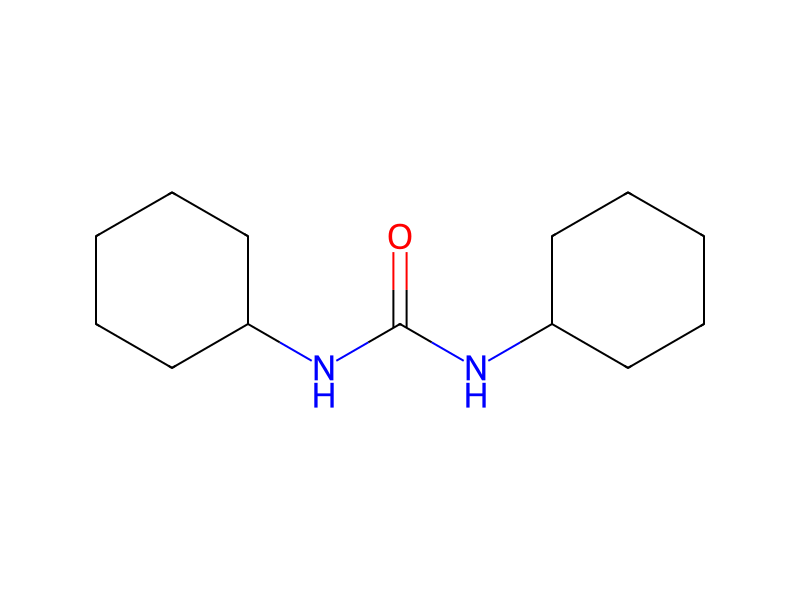
Dicyclohexylcarbodiimide → N,N'-Dicyclohexylurea
Reaction equation

C(OCCCCOC(OC1C=CC(C(O)=O)=CC=1)=O)(=[O:4])C=C.[CH:23]1([N:29]=[C:30]=[N:31][CH:32]2[CH2:37][CH2:36][CH2:35][CH2:34][CH2:33]2)[CH2:28][CH2:27][CH2:26][CH2:25][CH2:24]1>CN(C1C=CN=CC=1)C.ClCCl>[CH:32]1([NH:31][C:30]([NH:29][CH:23]2[CH2:24][CH2:25][CH2:26][CH2:27][CH2:28]2)=[O:4])[CH2:37][CH2:36][CH2:35][CH2:34][CH2:33]1Participants
5




Procedure
A solution of 4-(acryloxybutyloxycarbonyloxy)benzoic acid (2 mmol), N,N′-dicyclohexylcarbodiimide (2.2 mmol), 2,4-O-benzylidene-D-threitol (1.1 mmol; cf. Example 1c) and the catalyst 4-DMAP (0.1 mmol) in dichloromethane (5 ml) is stirred at room temperature until the reaction is complete, the N,N′-dicyclohexylurea which has been formed is filtered off and the solvent is removed under reduced pressure. The residue is finally purified by column chromatography and recrystallized from ethanol.
Sources & evidence
- ORD record
- ord-db144105abdc4385a8acacc9431110f1
- Source dataset
- uspto-grants-2003_09
- Patent number
- US06616990B2
Reaction notes
Loading…