3-Bromobenzonitrile → 3-pyrrolidin-1-ylbenzonitrile
Reaction equation

Br[C:2]1[CH:3]=[C:4]([CH:7]=[CH:8][CH:9]=1)[C:5]#[N:6].C1C=CC(P(C2C=CC3C(=CC=CC=3)C=2C2C3C(=CC=CC=3)C=CC=2P(C2C=CC=CC=2)C2C=CC=CC=2)C2C=CC=CC=2)=CC=1.CC(C)([O-])C.[Na+].[NH:62]1[CH2:66][CH2:65][CH2:64][CH2:63]1>O1CCCC1.C(OCC)C.O>[N:62]1([C:2]2[CH:3]=[C:4]([CH:7]=[CH:8][CH:9]=2)[C:5]#[N:6])[CH2:66][CH2:65][CH2:64][CH2:63]1Participants
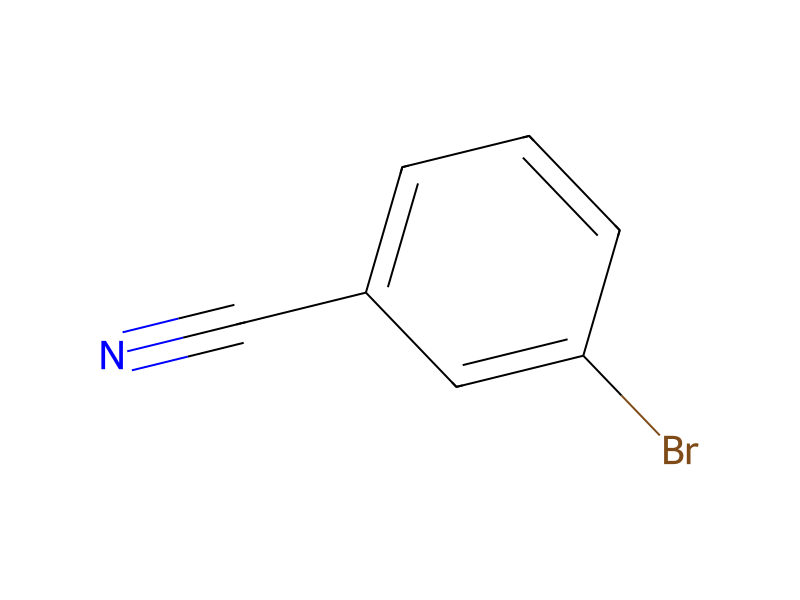

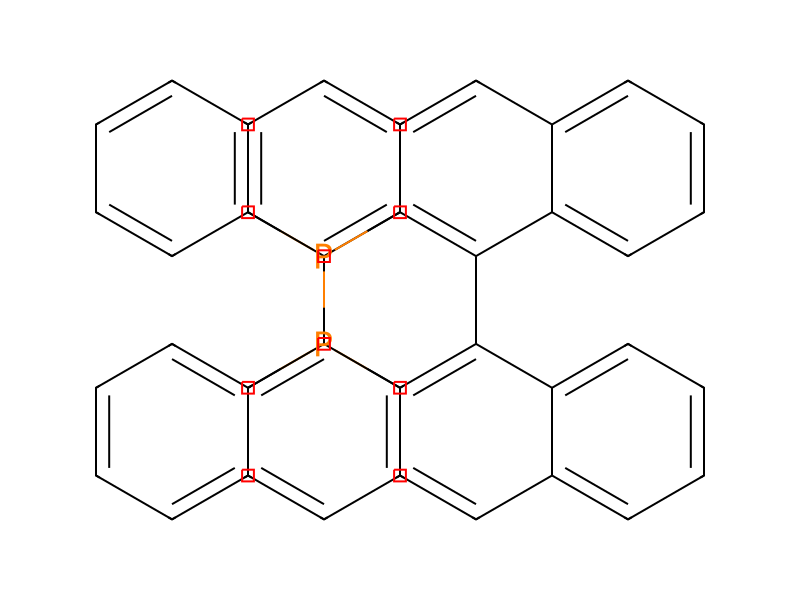





Conditions
- Temperature
- 80 °C
Procedure
A reaction mixture of 3-bromo-benzonitrile (0.91 g, 5 mmol), tris(dibenzylidenecetone)-dipalladium (229 mg), (S)-2,2′-bis(diphenylphosphino)-1,1′-binaphthyl (311 mg, 0.5 mmol), sodium tert-butoxide (740 mg, 7.7 mmol), pyrrolidine (0.58 mL, 6.9 mmol) in tetrahydrofuran (10 mL) was heated at 80° C. in a sealed tube for 6 h. The reaction mixture was worked up with water and diethyl ether. The organic layers were washed with brine and dried over anhydrous magnesium sulfate. The solid was then filtered off, and the filtrate was concentrated in vacuo. Purification of the crude residue by flash chromatography (Biotage system, KP-Sil™ 32-63 μm, 60 Å silica gel) eluting with 0-5% ethyl acetate in hexanes yielded 3-pyrrolidin-1-yl-benzonitrile (45 mg, 5%).
Workup
- washThe organic layers were washed with brine
- dry with materialdried over anhydrous magnesium sulfate
- filtrationThe solid was then filtered off
- concentrationthe filtrate was concentrated in vacuo
- customPurification of the crude residue by flash chromatography (Biotage system, KP-Sil™ 32-63 μm, 60 Å silica gel)
- washeluting with 0-5% ethyl acetate in hexanes
Sources & evidence
- ORD record
- ord-50de50b618b444b6936f0c49cef43f12
- Source dataset
- uspto-grants-2003_09
- Patent number
- US06617346B1
Reaction notes
Loading…