Ethylene Glycol → 2-(4-Bromo-2-Fluorophenyl)-1,3-Dioxolane
Reaction equation

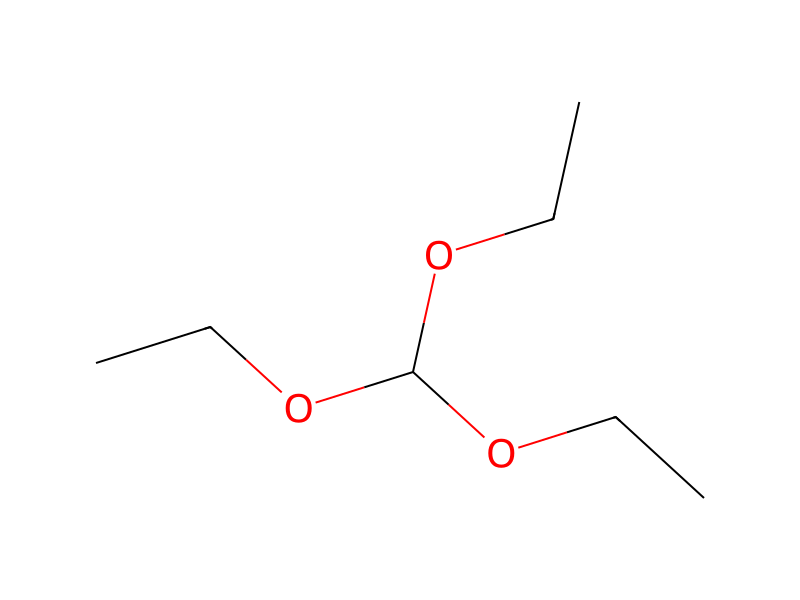
[Br:1][C:2]1[CH:9]=[CH:8][C:5]([CH:6]=[O:7])=[C:4]([F:10])[CH:3]=1.[CH2:11](O)[CH2:12][OH:13].C(OCC)(OCC)OCC.C1(C)C=CC(S(O)(=O)=O)=CC=1>ClCCCl>[Br:1][C:2]1[CH:9]=[CH:8][C:5]([CH:6]2[O:13][CH2:12][CH2:11][O:7]2)=[C:4]([F:10])[CH:3]=1Participants
6





Procedure
4-bromo-2-fluorobenzaldehyde (9.4 g, 46.3 mmol), ethylene glycol (13.2 mL), triethyl orthoformate (6.6 mL) and p-toluenesulfonic acid (0.09 g, 0.473 mmol) were stirred in DCE (50 mL) at 80° C. for 2.5 hours. Room temperature was attained and the solution was washed successively with saturated NaHCO3, H2O and brine, dried over MgSO4 and concentrated in vacuo to give the product (pale yellow oil). 1H NMR (CDCl3) δ 7.41 (t, J=8.1 Hz, 1H), 7.30 (dd, J=8.1, 1.8 Hz, 1H), 7.25 (dd, J=9.6, 1.8 Hz, 1H), 6.02 (s, 1H), 4.13 (m, 2H), 4.04 (m, 2H).
Workup
- customRoom temperature
- washthe solution was washed successively with saturated NaHCO3, H2O and brine
- dry with materialdried over MgSO4
- concentrationconcentrated in vacuo
- customto give the product (pale yellow oil)
Sources & evidence
- ORD record
- ord-d89a128c45c5421e93ed57c2778b7354
- Source dataset
- uspto-grants-2010_11
- Patent number
- US07834034B2
Reaction notes
Loading…