Hydrochloric Acid → 3,4-Dihydro-1-(2-naphthalenylmethyl)-2(1H)-naphthalenone
Reaction equation

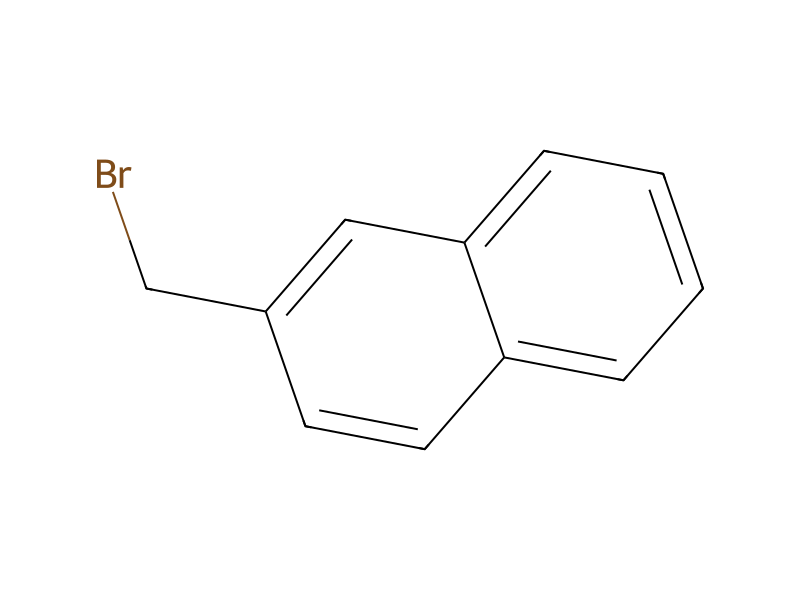
Br[CH2:2][C:3]1[CH:12]=[CH:11][C:10]2[C:5](=[CH:6][CH:7]=[CH:8][CH:9]=2)[CH:4]=1.[CH:13]1[C:22]2[C:17](=[CH:18][CH:19]=[CH:20][CH:21]=2)[CH2:16][CH2:15][C:14]=1N1CCCC1.[O:28]1CCOCC1.Cl>CCCCCC.C(OCC)(=O)C>[CH:4]1[C:5]2[C:10](=[CH:9][CH:8]=[CH:7][CH:6]=2)[CH:11]=[CH:12][C:3]=1[CH2:2][CH:13]1[C:22]2[C:17](=[CH:18][CH:19]=[CH:20][CH:21]=2)[CH2:16][CH2:15][C:14]1=[O:28]Participants
6





Procedure
A mixed solution of 0.53 g (92.87 mmol) of 2-(bromomethyl)naphthalene, 20.36 g (102.16 mmol) of 1-(3,4-dihydronaphthalene-2-yl)pyrrolidine and 120 ml of dehydrated dioxane was stirred for 4 hours while heating and refluxing. After cooled down to room temperature, 100 ml of a 5% hydrochloric acid aqueous solution was dropwise added to the reaction mixture, and the mixture was extracted twice with dichloromethane. The organic phase was dried on anhydrous sodium sulfate and filtered, and then the solvent was removed by distillation. A crude product obtained was refined by column chromatograph (silica gel: hexane/ethyl acetate=10/1) to obtain 16.05 g (yield: 60.5%) of 1-(naphthalene-2-ylmethyl)-3,4-dihydronaphthalene-2(1H)-one.
Workup
- temperaturewhile heating
- temperaturerefluxing
- extractionthe mixture was extracted twice with dichloromethane
- dry with materialThe organic phase was dried on anhydrous sodium sulfate
- filtrationfiltered
- customthe solvent was removed by distillation
- customA crude product obtained
Sources & evidence
- ORD record
- ord-7a01fbfcd17747b780fdd9ca1199e72b
- Source dataset
- uspto-grants-2010_11
- Patent number
- US07838130B2
Reaction notes
Loading…