Benzophenone → (4-Bromophenyl)(4-methylphenyl)methanol
Reaction equation

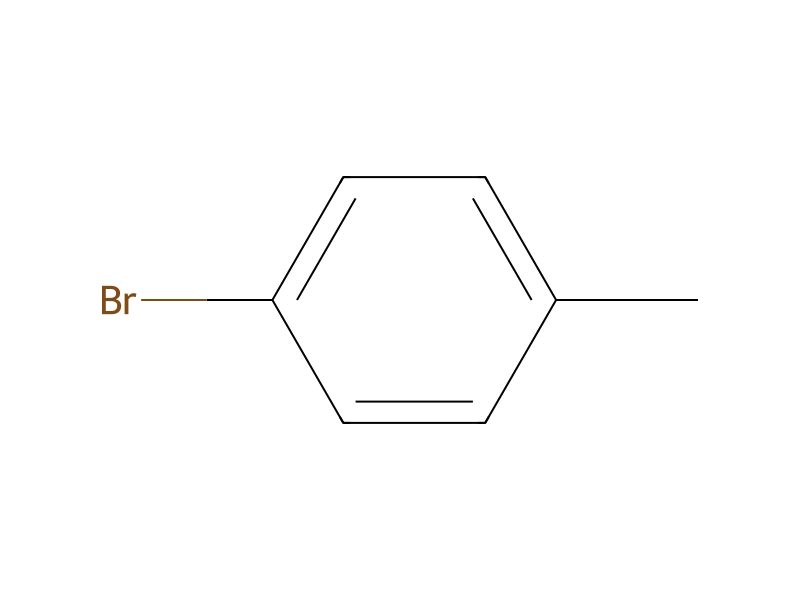
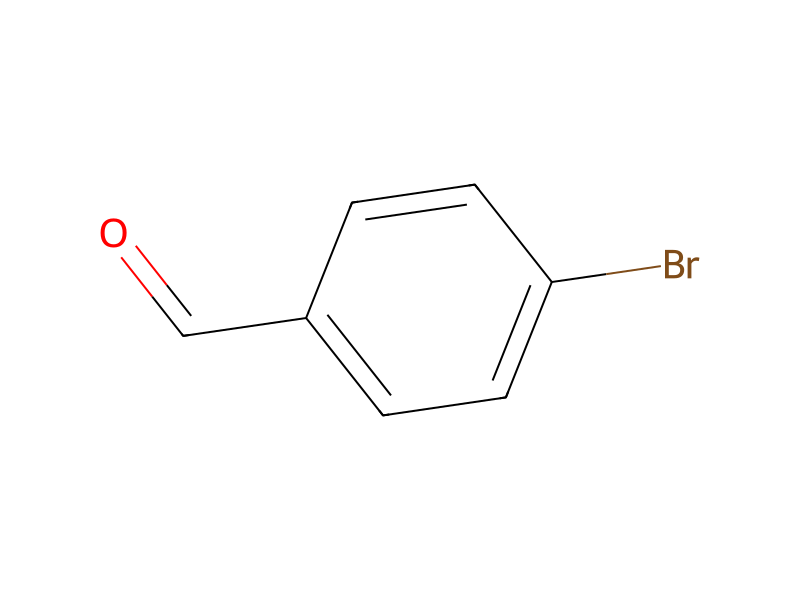
[C:1](C1C=CC=CC=1)(=O)[C:2]1[CH:7]=[CH:6][CH:5]=[CH:4][CH:3]=1.BrC1C=CC(C)=CC=1.[Br:23][C:24]1[CH:31]=[CH:30][C:27]([CH:28]=[O:29])=[CH:26][CH:25]=1>>[Br:23][C:24]1[CH:31]=[CH:30][C:27]([CH:28]([C:5]2[CH:6]=[CH:7][C:2]([CH3:1])=[CH:3][CH:4]=2)[OH:29])=[CH:26][CH:25]=1Participants


Procedure
The procedure below details the synthesis of a benzophenone dimer comprising a metal carboxylate and linked by a diamine terminated bridging moiety via the scheme set forth in FIG. 1. As shown in FIG. 1, synthesis of the benzophenone crosslinker (8) starts with a reaction between a Grignard reagent derived from commercially available 4-bromotoluene (1) and 4-bromobenzaldehyde (2), yielding (4′-bromophenyl)-4-methylphenyl methanol (3). Alcohol (3) was then oxidized with potassium permanganate (KMnO4) to provide 4-bromophenyl-p-toylmethanone (4), followed by oxidation of the methyl group with CrO3 to yield 4-(p-bromobenzoyl) benzoic acid (5). Esterification of acid (5) provided 4-(p-bromobenzoyl) benzoate (6). The bifunctional coupling between pentane diamine (NH2(CH2)5NH2)and methyl 4-(p-bromobenzoyl) benzoate (6) to yield the benzophenone dimer (7) was achieved using 1,1-bis(diphenyphosphino)ferrocene (DPPF) as the catalyst. The benzophenone dimer (7) was then hydrolyzed to provide the dipotassium salt (8). Details of each step are set forth below.
Sources & evidence
- ORD record
- ord-8de24b292687422bbf766f1add9006ed
- Source dataset
- uspto-grants-2007_10
- Patent number
- US07285363B2
Reaction notes
Loading…