Cesium carbonate → HCID 22142251, compound
Reaction equation

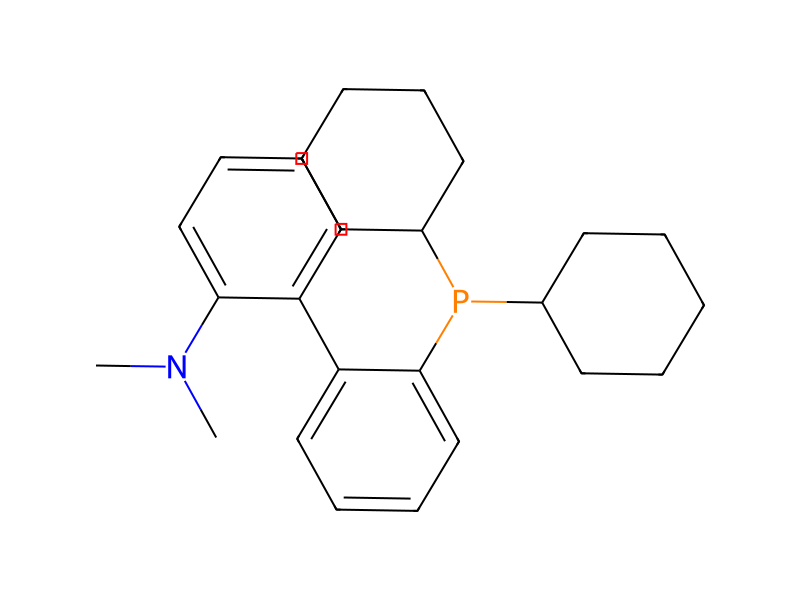
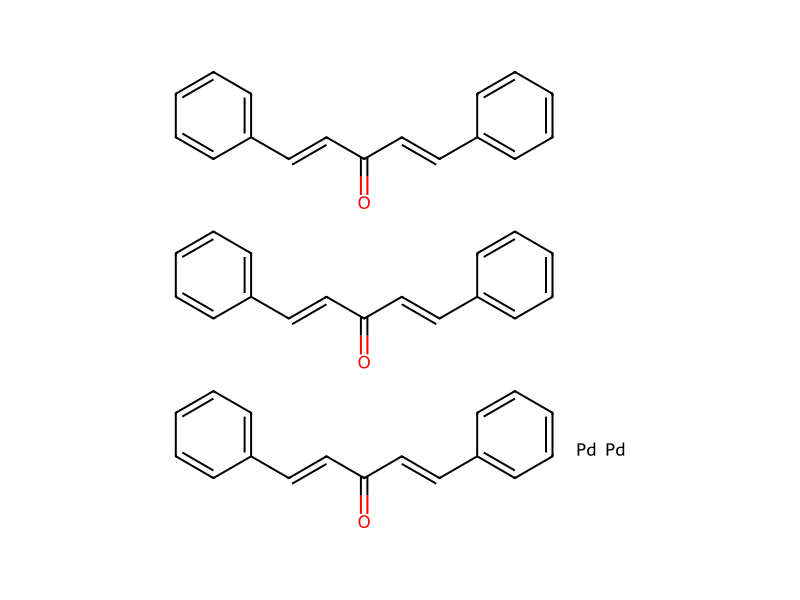
[CH3:1][C:2]1[CH:11]=[CH:10][C:9](Cl)=[C:8]2[C:3]=1[C:4](=[O:18])[CH:5]=[C:6]([C:13]([O:15][CH2:16][CH3:17])=[O:14])[O:7]2.[CH3:19][N:20]1[CH2:25][CH2:24][NH:23][CH2:22][CH2:21]1.C1(P(C2CCCCC2)C2C=CC=CC=2C2C=CC=CC=2N(C)C)CCCCC1.C(=O)([O-])[O-].[Cs+].[Cs+].C1(P(C2CCCC2)C2C=CC=CC=2C2C=CC=CC=2N(C)C)CCCC1>[Pd].[Pd].C(=CC(C=CC1C=CC=CC=1)=O)C1C=CC=CC=1.C(=CC(C=CC1C=CC=CC=1)=O)C1C=CC=CC=1.C(=CC(C=CC1C=CC=CC=1)=O)C1C=CC=CC=1.O1CCCC1>[CH2:16]([O:15][C:13]([C:6]1[O:7][C:8]2[C:3]([C:4](=[O:18])[CH:5]=1)=[C:2]([CH3:1])[CH:11]=[CH:10][C:9]=2[N:23]1[CH2:24][CH2:25][N:20]([CH3:19])[CH2:21][CH2:22]1)=[O:14])[CH3:17]Participants
Reactant 5




Product 1

Reagents, catalysts & solvents 2

Conditions
- Temperature
- 80 °C
Procedure
Ethyl 5-methyl-8-chloro-4-oxo-4H-chromene-2-carboxylate (1.0 g, 3.6 mmol) as prepared in Reference Example 6c above, was azeotroped with anhydrous toluene then the white solid was dissolved in 100 ml anhydrous toluene in a 250 mL single-neck round bottom flask. The mixture was degassed by alternating argon sparge and vacuum (3×), and the following were added in order: N-methylpiperazine (0.6 ml, 5.37 mmol), (2′-dicyclohexylphosphanyl-biphenyl-2-yl)-dimethyl-amine (JACS 1998, 120, p9722) (40 mg, 0.1 mmol,), tris(dibenzylideneacetone) dipalladium (0) (66 mg, 0.072 mmol) then cesium carbonate (1.6 g, 5.37 mmol). The mixture was again degassed via alternating argon sparge and vacuum and was heated at 80° C. for 17 h. Additional tris(dibenzylideneacetone) dipalladium (0) (66 mg, 0.072 mmol) and (2′-dicyclopentylphosphanyl-biphenyl-2-yl)-dimethyl-amine (40 g, 0.1 mmol,) were added and the reaction was stirred at 80° C. for another four days at which time the conversion was still only about 50% complete by BPLC. Tetrahydrofuran (100 mL) was added, and the combined mixture was filtered, concentrated under vacuum and purified by chromatography on silica eluted with 2.5% methanol in chloroform. The desired fractions were concentrated under vacuum to yield a yellow powder (250 mg=21%).
Workup
- customwas azeotroped with anhydrous toluene
- dissolutionthe white solid was dissolved in 100 ml anhydrous toluene in a 250 mL single-neck round bottom flask
- customThe mixture was degassed
- customsparge
- additionvacuum (3×), and the following were added in order
- customThe mixture was again degassed
- customsparge
- filtrationthe combined mixture was filtered
- concentrationconcentrated under vacuum
- custompurified by chromatography on silica
- washeluted with 2.5% methanol in chloroform
- concentrationThe desired fractions were concentrated under vacuum
- customto yield a yellow powder (250 mg=21%)
Sources & evidence
- ORD record
- ord-deb0f22ac87b43f99b3d77502dfe4c96
- Source dataset
- uspto-grants-2007_10
- Patent number
- US07285662B2
Reaction notes
Loading…