Sodium Carbonate → 2-Bromo-6-phenylpyridine
Reaction equation

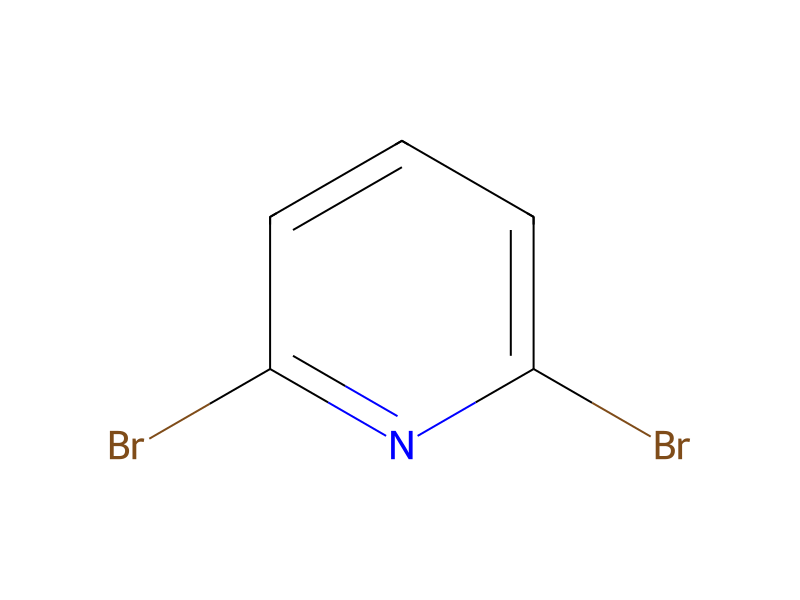
Br[C:2]1[CH:7]=[CH:6][CH:5]=[C:4]([Br:8])[N:3]=1.[C:9]1(B(O)O)[CH:14]=[CH:13][CH:12]=[CH:11][CH:10]=1.C(=O)([O-])[O-].[Na+].[Na+]>CO.C1C=CC([P]([Pd]([P](C2C=CC=CC=2)(C2C=CC=CC=2)C2C=CC=CC=2)([P](C2C=CC=CC=2)(C2C=CC=CC=2)C2C=CC=CC=2)[P](C2C=CC=CC=2)(C2C=CC=CC=2)C2C=CC=CC=2)(C2C=CC=CC=2)C2C=CC=CC=2)=CC=1>[Br:8][C:4]1[CH:5]=[CH:6][CH:7]=[C:2]([C:9]2[CH:14]=[CH:13][CH:12]=[CH:11][CH:10]=2)[N:3]=1Participants
6
Reactant 3


Product 1

Reagents, catalysts & solvents 2


Conditions
- Temperature
- 100 °C
Procedure
2,6-Dibromo-pyridine (1.2 g, 0.508 mmol), phenylboronic acid (0.620 g, 0.508 mmol) and sodium carbonate (2 M aq., 30 mL) were dissolved in MeOH (10 mL) and toluene (30 mL) and the solution was degassed with bubbling N2 (g). Tetrakis(triphenylphosphine)palladium(0) (0.172 g, 0.149 mmol) was added and the reaction was heated to 100° C. overnight. After cooling the reaction was submitted to standard aqueous workup and purified by silica gel chromatography to give the title compound
Workup
- customtoluene (30 mL) and the solution was degassed with bubbling N2 (g)
- temperatureAfter cooling the reaction
- custompurified by silica gel chromatography
Sources & evidence
- ORD record
- ord-341f19c99b1346cf9fdcf3ccfb592a86
- Source dataset
- uspto-grants-2014_03
- Patent number
- US08664220B2
Reaction notes
Loading…