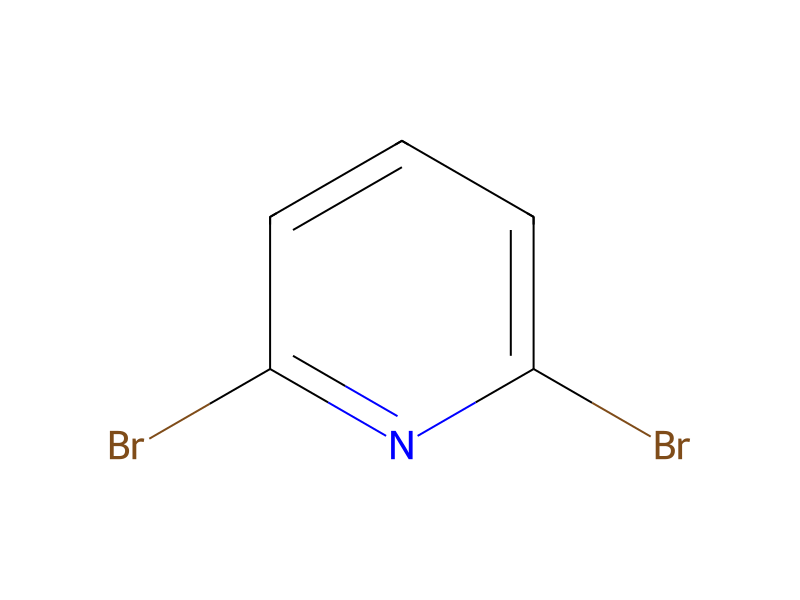
2,6-Dibromopyridine → 2-Bromo-6-(cyclobutyloxy)pyridine
Reaction equation

[CH:1]1([OH:5])[CH2:4][CH2:3][CH2:2]1.[H-].[Na+].[Br:8][C:9]1[CH:14]=[CH:13][CH:12]=[C:11](Br)[N:10]=1>C1(C)C=CC=CC=1>[Br:8][C:9]1[CH:14]=[CH:13][CH:12]=[C:11]([O:5][CH:1]2[CH2:4][CH2:3][CH2:2]2)[N:10]=1Participants
5
Reactant 3


Product 1

Reagents, catalysts & solvents 1

Procedure
Cyclobutanol (0.470 mL, 6 mmol) was dissolved in toluene (2 mL) and sodium hydride (60% in mineral oil, 0.240 g, 6 mmol) was added. The reaction was stirred at room temperature for 10 minutes then 2,6-dibromo-pyridine (0.710 g, 3 mmol) was added. The reaction was heated to 110° C. for 16 hours then cooled to room temperature, filtered through Celite, and purified on silica gel (0-5% EtOAc in hexanes) to give the title compound.
Workup
- temperatureThe reaction was heated to 110° C. for 16 hours
- temperaturethen cooled to room temperature
- filtrationfiltered through Celite
- custompurified on silica gel (0-5% EtOAc in hexanes)
Sources & evidence
- ORD record
- ord-891672604faa41d2b1f08dabf71b3a63
- Source dataset
- uspto-grants-2014_03
- Patent number
- US08664220B2
Reaction notes
Loading…