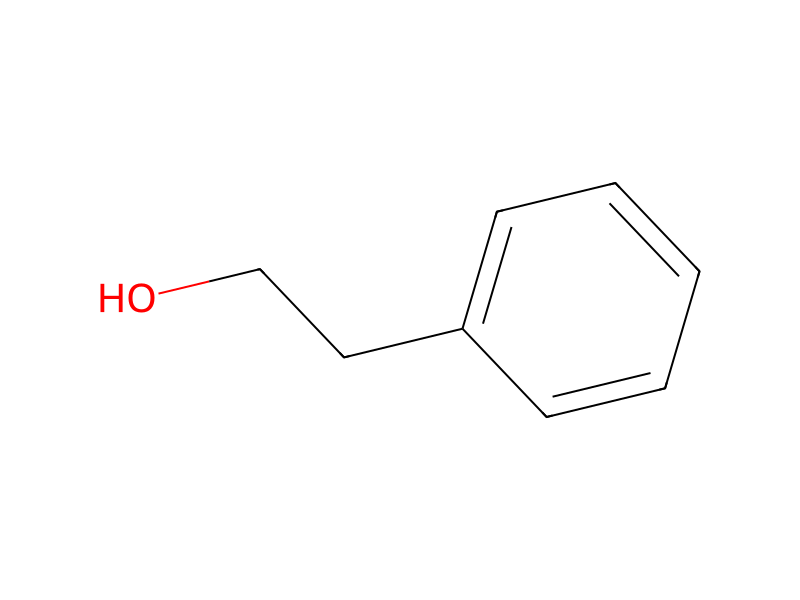
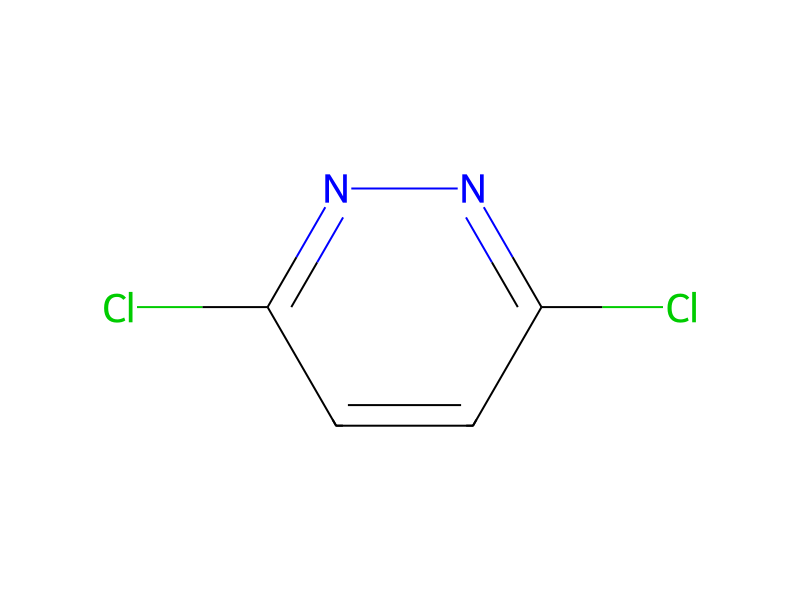
2-Phenylethanol → 3-Chloro-6-phenethyloxypyridazine
Reaction equation

[Cl:1][C:2]1[N:3]=[N:4][C:5](Cl)=[CH:6][CH:7]=1.[C:9]1([CH2:15][CH2:16][OH:17])[CH:14]=[CH:13][CH:12]=[CH:11][CH:10]=1.[H-].[Na+]>CN1CCCC1=O>[Cl:1][C:2]1[N:3]=[N:4][C:5]([O:17][CH2:16][CH2:15][C:9]2[CH:14]=[CH:13][CH:12]=[CH:11][CH:10]=2)=[CH:6][CH:7]=1Participants
5
Reactant 3

Product 1

Reagents, catalysts & solvents 1

Procedure
3,6-Dichloropyridazine (1.0 g, 6.712 mmol), 2-phenylethanol (820 mg, 6.712 mmol) and sodium hydride (60 percent suspension in oil, 268 mg, 6.712 mmol) were stirred in 25 ml of N-methylpyrrolidin-2-one at room temperature for 30 minutes. After concentrating, water and ethyl acetate were added, and the organic phase was removed, concentrated and purified by preparative HPLC (PR18, acetonitrile/water 0.1% TFA). Yield: 878 mg (56%), M+H+: 235.1.
Workup
- concentrationAfter concentrating
- additionwater and ethyl acetate were added
- customthe organic phase was removed
- concentrationconcentrated
- custompurified by preparative HPLC (PR18, acetonitrile/water 0.1% TFA)
Sources & evidence
- ORD record
- ord-050a1149c3394e89821c411c6e8ed14e
- Source dataset
- uspto-grants-2014_03
- Patent number
- US08673917B2
Reaction notes
Loading…