Ammonia → 6-Chloroquinazoline-2,4(1H,3H)-diimine
Reaction equation

[NH2:1][C:2]1[CH:9]=[CH:8][C:7]([Cl:10])=[CH:6][C:3]=1[C:4]#[N:5].Cl.Cl[C:13](N)=[NH:14].S1(CCCC1)(=O)=O.CS(C)(=O)=O.[NH3:28]>O>[Cl:10][C:7]1[CH:6]=[C:3]2[C:2](=[CH:9][CH:8]=1)[N:1]=[C:13]([NH2:14])[N:5]=[C:4]2[NH2:28]Participants
7


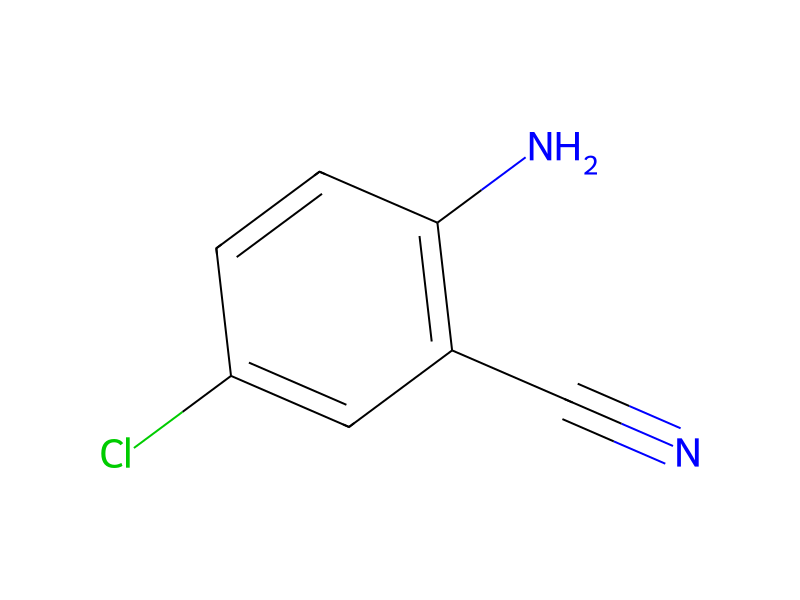



Conditions
- Temperature
- 165 °C
Procedure
A mixture of 2-amino-5-chlorobenzonitrile (1.07 g, 7.0 mmol), chloro-formamidine hydrochloride (1.6 g, 14 mmol), sulfolane (0.5 ml) and dimethylsulfone (3 g) was heated at 165° C. for 30 minutes. Then, water (30 ml) was added to the reaction mixture. The pH was adjusted to 7-8 by the addition of a 33% aqueous ammonia solution in water. The precipitate was collected by filtration, washed with water and dried over P2O5, yielding the title compound as a yellowish solid (1.35 g, yield: 99%) which was characterized by its mass spectrum as follows: MS (m/z): 195 ([M+H]+, 100).
Workup
- filtrationThe precipitate was collected by filtration
- washwashed with water
- dry with materialdried over P2O5
Sources & evidence
- ORD record
- ord-e5e385ea914a486da22f9be0f2531dd1
- Source dataset
- uspto-grants-2014_03
- Patent number
- US08673929B2
Reaction notes
Loading…