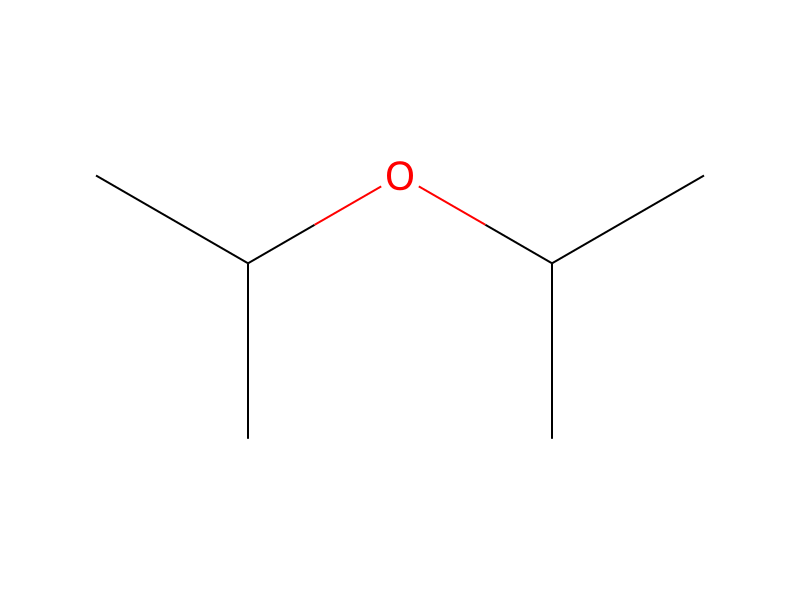
Diisopropyl Ether → Benzyl 4-(2-oxoethyl)piperidine-1-carboxylate
Reaction equation

Cl[C:2](=[O:20])[CH2:3][CH:4]1[CH2:9][CH2:8][N:7]([C:10]([O:12][CH2:13][C:14]2[CH:19]=[CH:18][CH:17]=[CH:16][CH:15]=2)=[O:11])[CH2:6][CH2:5]1.S1C=CC=C1.O(C(C)C)C(C)C.[H][H]>[Pd].CN(C)C(=O)C>[O:20]=[CH:2][CH2:3][CH:4]1[CH2:5][CH2:6][N:7]([C:10]([O:12][CH2:13][C:14]2[CH:15]=[CH:16][CH:17]=[CH:18][CH:19]=2)=[O:11])[CH2:8][CH2:9]1Participants
7
Reactant 4



Product 1

Reagents, catalysts & solvents 2


Procedure
A mixture of 90 parts of (phenylmethyl) 4-(2- chloro-2-oxoethyl)-1-piperidinecarboxylate, 90 parts of N,N-dimethylacetamide 6 parts of a thiophene solution and 438 parts of 2,2'-oxybispropane was hydrogenated at normal pressure and at room temperature in the presence of 5 parts of palladium-on-charcoal 10%. After the calculated amount of hydrogen was taken up, the catalyst was filtered off and the filtrate was taken up in water. The separated organic layer was dried, filtered and evaporated, yielding 75 parts (95.7%) of (phenylmethyl) 4-(2-oxoethyl)-1-piperidinecarboxylate as a residue (interm. 7).
Workup
- filtrationthe catalyst was filtered off
- customThe separated organic layer was dried
- filtrationfiltered
- customevaporated
Sources & evidence
- ORD record
- ord-f0109f1715e245e9a194756130010a09
- Source dataset
- uspto-grants-1992_05
- Patent number
- US05112825
Reaction notes
Loading…