p-Toluenesulfonic acid → HCID 18942876, compound
Reaction equation

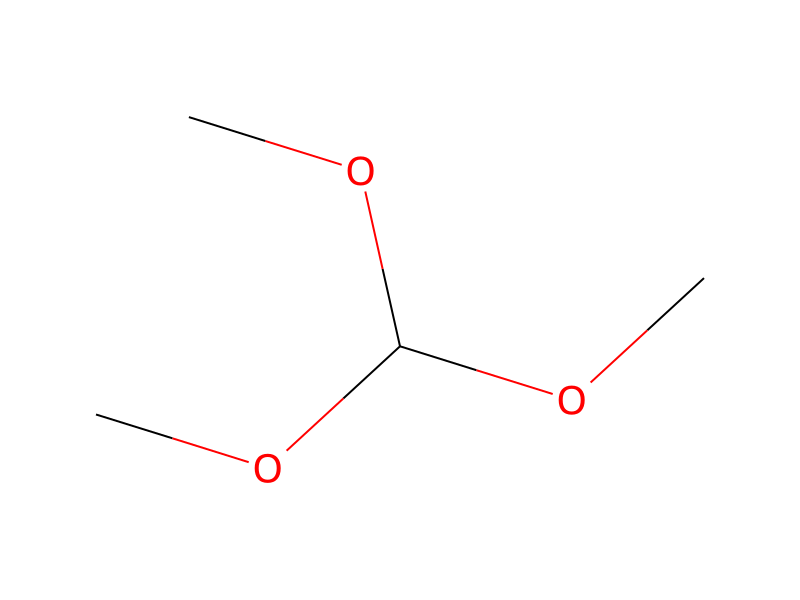
C1(C)C=CC(S(O)(=O)=O)=CC=1.[C:12]([O:18][C:19]1[CH:20]=[C:21]([CH:24]=[CH:25][CH:26]=1)C=O)(=[O:17])[C:13]([CH3:16])([CH3:15])[CH3:14].CO[CH:29]([O:32][CH3:33])[O:30][CH3:31].C(=O)(O)[O-].[Na+]>CO>[CH3:33][O:32][CH:29]([O:30][CH3:31])[C:21]1[CH:24]=[CH:25][CH:26]=[C:19]([O:18][C:12](=[O:17])[C:13]([CH3:15])([CH3:14])[CH3:16])[CH:20]=1Participants
Reactant 4



Product 1

Reagents, catalysts & solvents 1

Procedure
Four hundred mg of p-toluenesulfonic acid dissolved in 25 ml of methanol was added, with stirring, to the 3-pivaloyloxybenzaldehyde of Example I. Trimethylorthoformate (224 ml; 2.05 mol) was then added dropwise. The minor exotherm that resulted was allowed to proceed unchecked while the mixture was stirred for 1 hour. One half gram of sodium bicarbonate was added, and the flask was placed on the rotary evaporator (bath temperature 40° C.) to remove all volatiles. The resulting oil was passed through a short silica gel column under nitrogen pressure to give an orange-brown oil which was pumped under vacuum (1.0 mm Hg) with stirring to yield 426 g of crude 3-pivaloyloxybenzaldehyde dimethyl acetal. Infrared analysis revealed no aldehyde carbonyl absorption (1695 cm-1).
Workup
- additionwas added
- customThe minor exotherm that resulted
- customthe flask was placed on the rotary evaporator (bath temperature 40° C.)
- customto remove all volatiles
- customto give an orange-brown oil which
- stirringwith stirring
Sources & evidence
- ORD record
- ord-e4ae38d757f54351ab146d1776a2baca
- Source dataset
- uspto-grants-1992_05
- Patent number
- US05112960
Reaction notes
Loading…