4-Chloro-benzaldehyde oxime → HCID 19899107, compound
Reaction equation

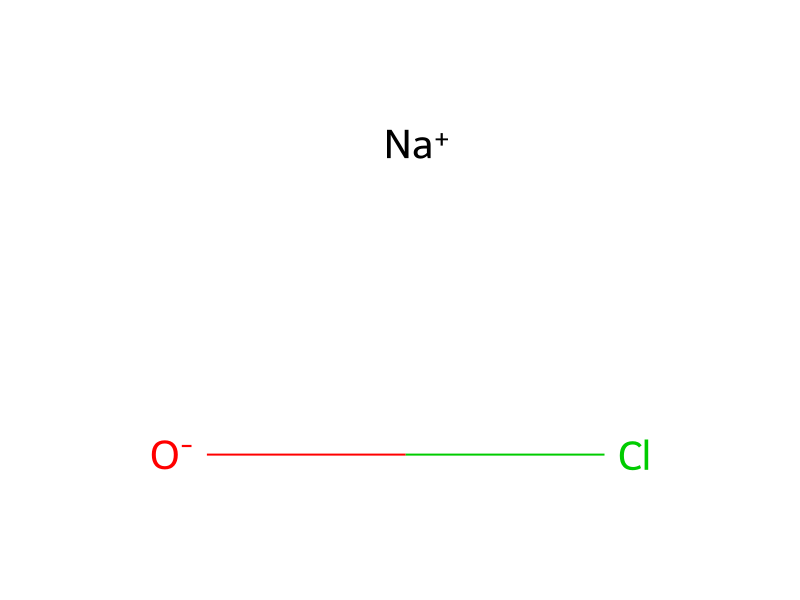
Cl[O-].[Na+].[CH:4]1([C:11]([O:13][CH3:14])=[O:12])[CH2:10][CH2:9][CH:8]=[CH:7][CH2:6][CH2:5]1.[Cl:15][C:16]1[CH:24]=[CH:23][C:19]([CH:20]=[N:21][OH:22])=[CH:18][CH:17]=1>[Br-].C([N+](CCCC)(CCCC)CCCC)CCC.C(OCC)(=O)C>[Cl:15][C:16]1[CH:24]=[CH:23][C:19]([C:20]2[CH:8]3[CH2:9][CH2:10][CH:4]([C:11]([O:13][CH3:14])=[O:12])[CH2:5][CH2:6][CH:7]3[O:22][N:21]=2)=[CH:18][CH:17]=1Participants





Procedure
180 ml of 16.38% (w/v) aqueous solution of sodium hypochlorite were added slowly at 5° C. over a period of 6 hours while stirring well to a solution of 61.6 g (0.4 mol) of methyl cyclohept-4-enecarboxylate, 62.0 g (0.4 mol) of 4-chlorobenzaldehyde oxime and 0.5 g of tetrabutylammonium bromide in 800 ml of ethyl acetate. The mixture was held at 20° C. for 2 days. The mixture was then filtered and the organic phase was separated and dried over magnesium sulfate. The solvent was removed by evaporation and the residue was crystallized from diethyl ether/hexane to give 44.65 g of methyl 3-(4-chlorophenyl)-3a,5,6,7,8,8a-hexahydro-4H-cyclohept[d]isoxazole-6-carboxylate as a mixture of two diastereoisomers of melting point 150°-185° C. Isomer A has a melting point of 237°-239° C. and isomer B has a melting point of 162°-166° C.
Workup
- filtrationThe mixture was then filtered
- customthe organic phase was separated
- dry with materialdried over magnesium sulfate
- customThe solvent was removed by evaporation
- customthe residue was crystallized from diethyl ether/hexane
Sources & evidence
- ORD record
- ord-1fa8d537841c451c8b5ed4ccf314c62b
- Source dataset
- uspto-grants-1992_05
- Patent number
- US05114960
Reaction notes
Loading…