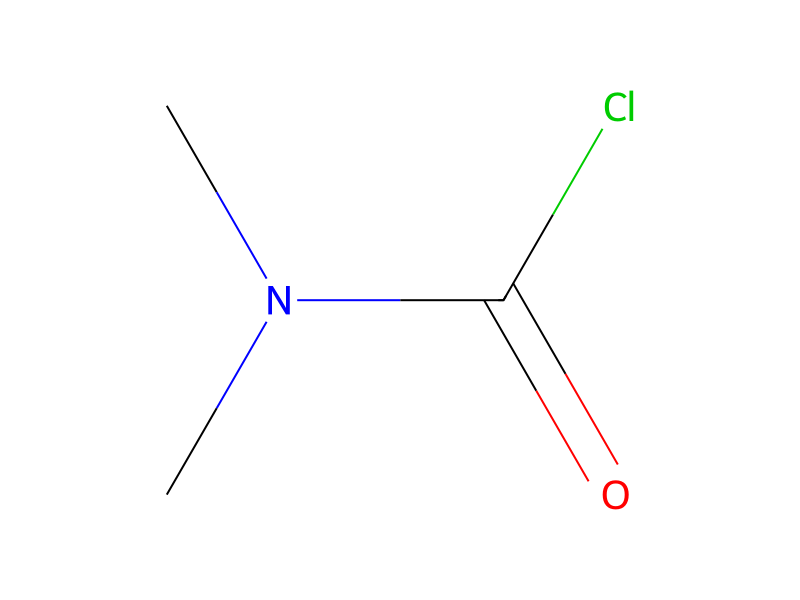
Dimethylcarbamoyl Chloride → 2-(2,4-difluorophenyl)-3-(2-cyanopyridin-5-yl)-1-(1H-1,2,4-triazol-1-yl)butan-2-ol
Reaction equation

[F:1][C:2]1[CH:7]=[C:6]([F:8])[CH:5]=[CH:4][C:3]=1[C:9]([OH:25])([CH:16]([C:18]1[CH:19]=[N+:20]([O-])[CH:21]=[CH:22][CH:23]=1)[CH3:17])[CH2:10][N:11]1[CH:15]=[N:14][CH:13]=[N:12]1.[CH3:26][N:27](C)C(Cl)=O.C[Si](C#N)(C)C>ClCCl>[F:1][C:2]1[CH:7]=[C:6]([F:8])[CH:5]=[CH:4][C:3]=1[C:9]([OH:25])([CH:16]([C:18]1[CH:23]=[CH:22][C:21]([C:26]#[N:27])=[N:20][CH:19]=1)[CH3:17])[CH2:10][N:11]1[CH:15]=[N:14][CH:13]=[N:12]1Participants
5



Procedure
A mixture of the product of part (i) (0.93 g) and N,N-dimethylcarbamoyl chloride (0.40 g) in dichloromethane (10 ml) was stirred at room temperature overnight. Trimethylsilyl cyanide (0.40 g) was added and stirring was continued for a further 60 hours. The solution was washed with 10% sodium carbonate solution and the aqueous layer was separated and washed with dichloromethane. The organic layers were combined, dried (MgSO4) and evaporated. The residue was chromatographed on silica gel using hexane/isopropanol (4:1) as eluant to give 2-(2,4-difluorophenyl)-3-(2-cyanopyridin-5-yl)-1-(1H-1,2,4-triazol-1-yl)butan-2-ol, (0.18 g), m.p. 136°-141°.
Workup
- stirringstirring
- waitwas continued for a further 60 hours
- washThe solution was washed with 10% sodium carbonate solution
- customthe aqueous layer was separated
- washwashed with dichloromethane
- dry with materialdried (MgSO4)
- customevaporated
- customThe residue was chromatographed on silica gel
Sources & evidence
- ORD record
- ord-5ac4373bedf84060a0e0c10169e1da55
- Source dataset
- uspto-grants-1992_05
- Patent number
- US05116844
Reaction notes
Loading…