Triethylamine → HCID 67826604, compound
Reaction equation

[CH3:1][CH:2]1[CH2:11][C:10]([CH3:13])([CH3:12])[C:9]2[C:4](=[CH:5][CH:6]=[C:7](Br)[CH:8]=2)[S:3]1.[CH3:15][Si:16](C#C)([CH3:18])[CH3:17].[CH2:21](N(CC)CC)[CH3:22]>[Pd](Cl)Cl>[CH3:21][C:22]#[C:1][CH:2]1[CH2:11][C:10]([CH3:13])([CH3:12])[C:9]2[C:4](=[CH:5][CH:6]=[C:7]([Si:16]([CH3:18])([CH3:17])[CH3:15])[CH:8]=2)[S:3]1Participants
Reactant 3



Product 1

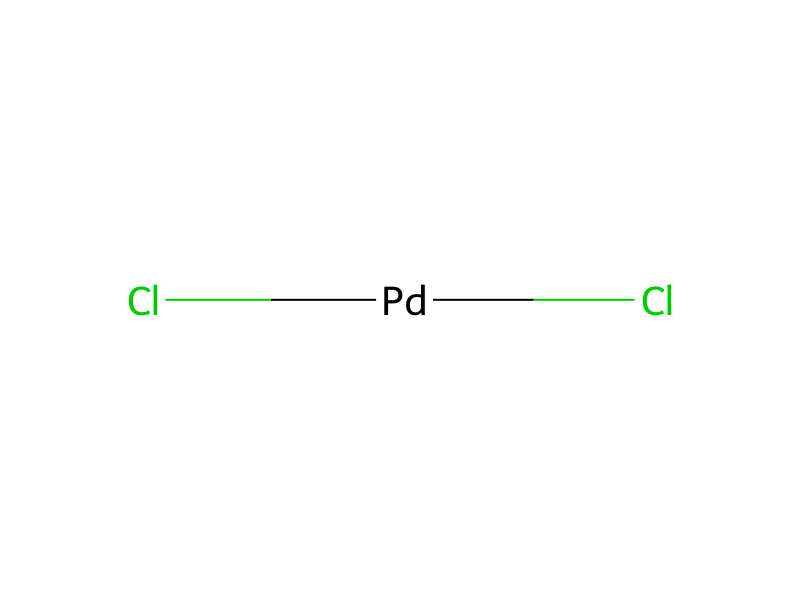
Reagents, catalysts & solvents 1
Conditions
- Temperature
- 55 °C
Procedure
A solution of 201 mg (74 mmol) of 2,4,4-trimethyl-6-bromo-thiochroman (Compound 53) in 1 ml of distilled triethylamine was placed in a heavy walled tube and degassed. The mixture was then treated under argon with 0.53 ml (3.72 mmol) of trimethylsilylacetylene and a powdered mixture of 52 mg (0.074 mmol) of bis-triphenylhosphine palladium (II) chloride and 28 mg (0.15 mmol) of cuprous idodide. The reaction mixture was placed under argon and the tube was sealed. The mixture was heated at 55 degrees C. for 72 hours. The mixture was cooled to room temperature and filtered through celite and the residue washed with CH2Cl2. The filtrate was concentrated in-vacuo and the residue was purified by flash chromatography (silica; hexanes) to give the title compound as a yellow oil. PMR (CDCl3): & 0.24 (9 H, s), 1.22 (3 H, s), 1.33 (3 H, d, J=6.6 Hz), 1.37 (3 H, s), 1.71 (1 H, t, J~13.0 Hz) 1.86 (1 H, dd, J=13.0 Hz, 3.0 Hz) 3.38-3.50 (1 H, m), 7.07 (1 H, dd, J=8.1 Hz, 1.8 Hz), 7.18 (1 H, d, J=1.8 Hz), 7.26 (1 H, d, J=8.1 Hz)
Workup
- customdegassed
- customthe tube was sealed
- temperatureThe mixture was cooled to room temperature
- filtrationfiltered through celite
- washthe residue washed with CH2Cl2
- concentrationThe filtrate was concentrated in-vacuo
- customthe residue was purified by flash chromatography (silica; hexanes)
Sources & evidence
- ORD record
- ord-45853d7885834ff6bc91f32abfad04ef
- Source dataset
- uspto-grants-1994_01
- Patent number
- US05278318
Reaction notes
Loading…