3,4-dihydro-2H-pyran → 5-Bromo-1-(tetrahydropyran-2-yloxy)indane
Reaction equation

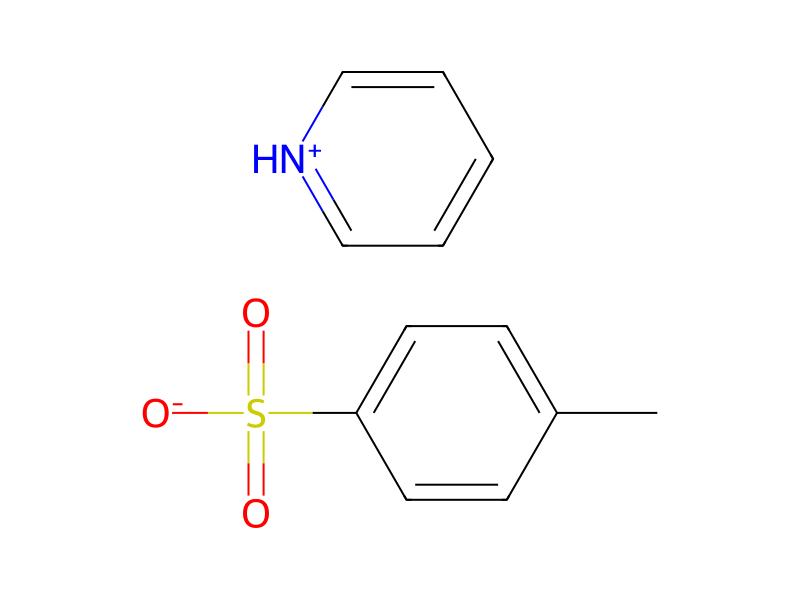
[Br:1][C:2]1[CH:3]=[C:4]2[C:8](=[CH:9][CH:10]=1)[CH:7]([OH:11])[CH2:6][CH2:5]2.C1(C)C=CC(S([O-])(=O)=O)=CC=1.[NH+]1C=CC=CC=1.[O:29]1[CH:34]=[CH:33][CH2:32][CH2:31][CH2:30]1>C(Cl)Cl>[Br:1][C:2]1[CH:3]=[C:4]2[C:8](=[CH:9][CH:10]=1)[CH:7]([O:11][CH:30]1[CH2:31][CH2:32][CH2:33][CH2:34][O:29]1)[CH2:6][CH2:5]2Participants
5




Procedure
9.6 g of 5-bromo-1-hydroxyindane was dissolved in 100 ml of dry methylene chloride. To the solution were added, at room temperature, 570 mg of pyridinium p-toluenesulfonate and 4.5 ml of 3,4-dihydro-2H-pyran. The resulting mxiture was stirred at the same temperature for 3 hours. The reaction mixture was added to ice water. The organic layer was separated, washed with a saturated aqueous sodium chloride solution, and dried over anhydrous magnesium sulfate. The solvent was removed by distillation under reduced pressure. The residue thus obtained was purified by column chromatography (eluant: toluene/ethyl acetate=15/1) to obtain 13.1 g of oily 5-bromo-1-(tetrahydropyran-2-yloxy)indane.
Workup
- additionTo the solution were added, at room temperature
- customThe organic layer was separated
- washwashed with a saturated aqueous sodium chloride solution
- dry with materialdried over anhydrous magnesium sulfate
- customThe solvent was removed by distillation under reduced pressure
- customThe residue thus obtained
- customwas purified by column chromatography (eluant: toluene/ethyl acetate=15/1)
Sources & evidence
- ORD record
- ord-e670c233a35d4575ac39419c48850a6d
- Source dataset
- uspto-grants-1994_01
- Patent number
- US05280032
Reaction notes
Loading…