Hydrochloric Acid → 2,2-Difluoro-benzo(1,3)dioxole-4-carbaldehyde
Reaction equation

C([Li])CCC.CN(C)CCN(C)C.[F:14][C:15]1([F:24])[O:19][C:18]2[CH:20]=[CH:21][CH:22]=[CH:23][C:17]=2[O:16]1.CN([CH:28]=[O:29])C.Cl>C1(C)C=CC=CC=1>[CH:21]1[CH:20]=[C:18]2[O:19][C:15]([F:14])([F:24])[O:16][C:17]2=[C:23]([CH:28]=[O:29])[CH:22]=1Participants






Procedure
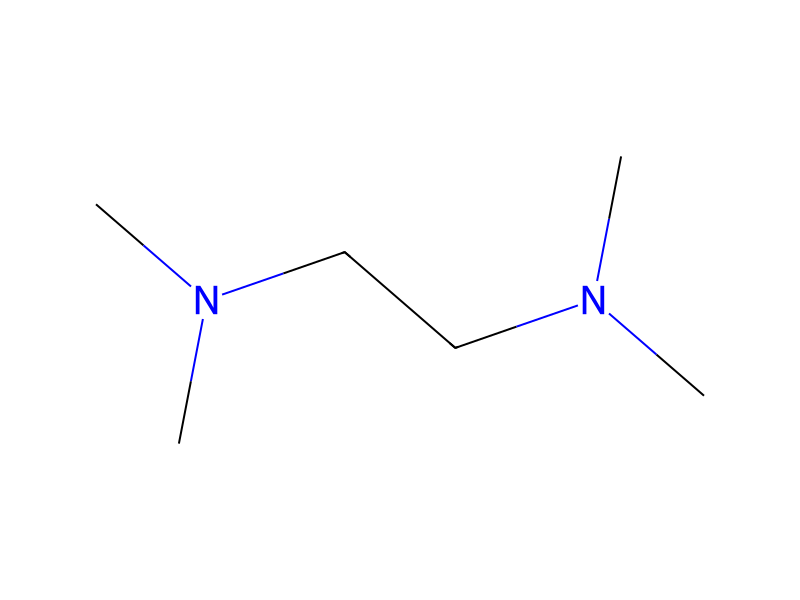
94.0 g (272 mmol) of n-butyllithium (18.5% in toluene) are added dropwise under a nitrogen atmosphere, at from -15° to -10° C., over a period of 1.5 hours, to 29.5 g (254 mmol) of N,N,N',N'-tetramethylethylenediamine and 40.0 g (253 mmol) of 2,2-difluoro-1,3-benzodioxole in 35 ml of toluene, an orange suspension being formed. 19.7 g (270 mmol) of DMF are then metered in at from -15° to -10° C. over a period of 1/2 hour. The pale yellow suspension is poured at +10° C. onto 346 g (1.105 mol) of 11.6% aqueous hydrochloric acid and the whole is stirred for 1/2 hour to complete the reaction. The aqueous phase is separated off and the organic phase is concentrated by evaporation in a vacuum rotary evaporator at 50° C./200 mbar under nitrogen to yield the desired product.
Workup
- customan orange suspension being formed
- customthe reaction
- customThe aqueous phase is separated off
- concentrationthe organic phase is concentrated by evaporation in a vacuum rotary evaporator at 50° C./200 mbar under nitrogen
Sources & evidence
- ORD record
- ord-67fd574096e344f999a31199149eae52
- Source dataset
- uspto-grants-1994_01
- Patent number
- US05281718
Reaction notes
Loading…