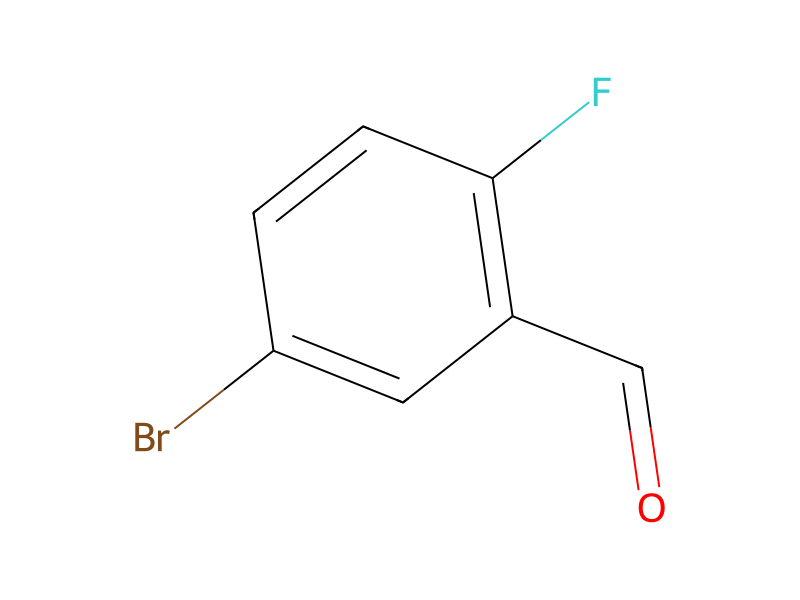
5-Bromo-2-fluorobenzaldehyde → 4-Bromo-2-ethenyl-1-fluorobenzene
Reaction equation

[CH3:1]C(C)([O-])C.[K+].[Br:7][C:8]1[CH:9]=[CH:10][C:11]([F:16])=[C:12]([CH:15]=1)[CH:13]=O>[Br-].C[P+](C1C=CC=CC=1)(C1C=CC=CC=1)C1C=CC=CC=1.C1COCC1>[Br:7][C:8]1[CH:9]=[CH:10][C:11]([F:16])=[C:12]([CH:15]=1)[CH:13]=[CH2:1]Participants
5



Procedure
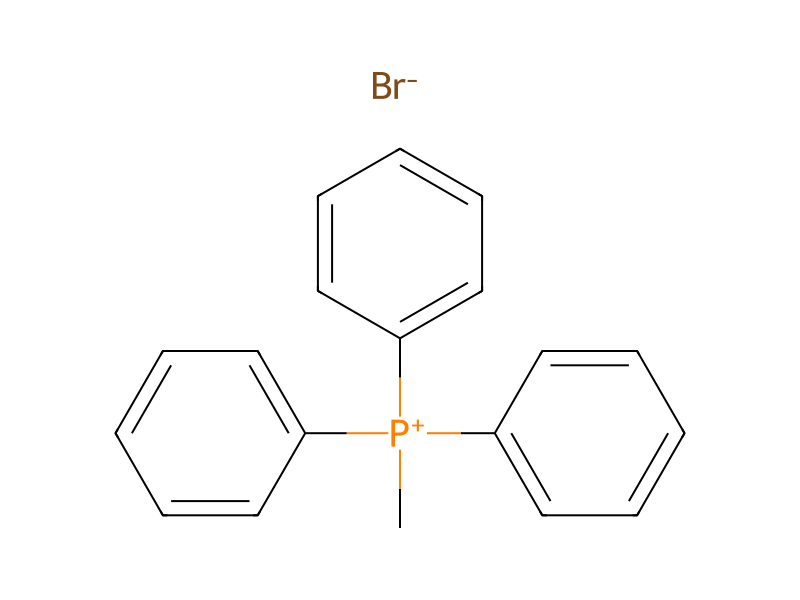
A mixture of methyltriphenylphosphonium bromide (2.14 g, 6 mmol) and potassium t-butoxide (672 mg, 6 mmol) in 50 mL of THF was refluxed for 30 minutes under N2 and then cooled to room temperature. 5-Bromo-2-fluorobenzaldehyde (1.02 g, 5 mmol) was added and the resulting mixture was refluxed for 2 hours (until the TLC showed the disappearance of starting aldehyde). The reaction was concentrated in vacuo and partitioned between water and ethyl acetate. The acetate layer was washed with water and brine. The solution was dried over MgSO4 and concentrated in vacuo. The residue was purified by chromatography (silica gel, 15:1 hexanes-diethyl ether) to provide 900 mg (90%) of 5-bromo-2-fluorostyrene.
Workup
- temperaturewas refluxed for 30 minutes under N2
- temperaturethe resulting mixture was refluxed for 2 hours (until the TLC
- concentrationThe reaction was concentrated in vacuo
- custompartitioned between water and ethyl acetate
- washThe acetate layer was washed with water and brine
- dry with materialThe solution was dried over MgSO4
- concentrationconcentrated in vacuo
- customThe residue was purified by chromatography (silica gel, 15:1 hexanes-diethyl ether)
Sources & evidence
- ORD record
- ord-deec79f1804a4ca4a0de6e77ef4d3f82
- Source dataset
- uspto-grants-2006_10
- Patent number
- US07115591B2
Reaction notes
Loading…