Triethylamine → HCID 21939609, compound
Reaction equation

Br[C:2]1[CH:7]=[CH:6][C:5]([O:8][CH:9]([CH3:11])[CH3:10])=[CH:4][CH:3]=1.O1CCOCC1.[CH3:18][C:19]1([CH3:26])[C:23]([CH3:25])([CH3:24])[O:22][BH:21][O:20]1.C(N(CC)CC)C>C(OCC)(=O)C>[CH3:18][C:19]1([CH3:26])[C:23]([CH3:25])([CH3:24])[O:22][B:21]([C:2]2[CH:7]=[CH:6][C:5]([O:8][CH:9]([CH3:11])[CH3:10])=[CH:4][CH:3]=2)[O:20]1Participants





Procedure
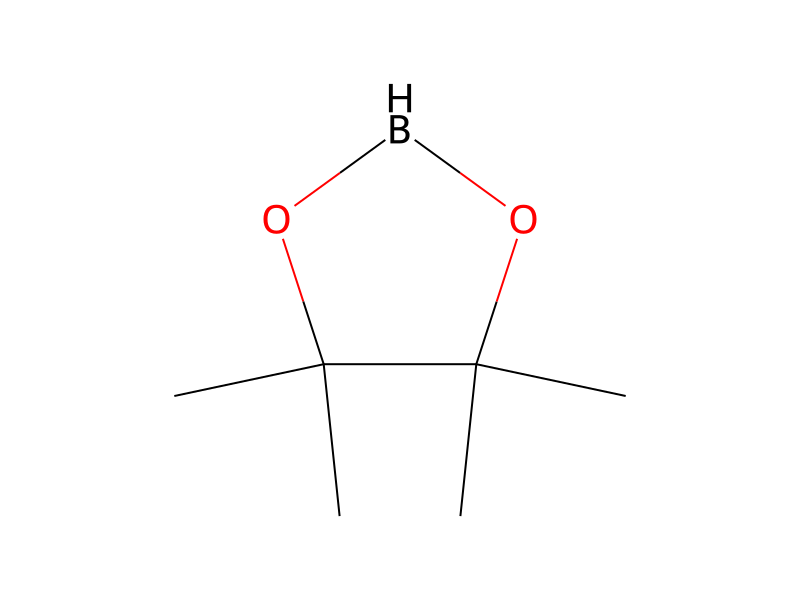
1-Bromo-4-isopropoxybenzene was combined with dioxane (10.5 mL) and dichloropalladium(dppf) dichloromethane complex (36 mg) under argon. 4,4,5,5-Tetramethyl-1,3,2-dioxaborolane (0.96 mL) was added followed by triethylamine (1.29 mL). The reaction was heated to 90° C. for 23 hours after which, dichloropalladium(dppf) dichloromethane complex (36 mg), 4,4,5,5-tetramethyl-1,3,2-dioxaborolane (0.96 mL) and triethylamine (1.29 mL) was added. Heating was continued for an additional 19 hours after which, it was cooled to room temperature and diluted with ethyl acetate (25 mL). The mixture was washed with water (2×20 mL) and brine (20 mL). The organic phase was dried over anhydrous sodium sulfate, filtered and concentrated. Purification of the residue on silica gel (0% to 50% ethyl acetate/hexane over 40 minutes) gave 4-(4,4,5,5-tetramethyl-1,3,2-dioxaborolan-2-yl)isopropoxybenzene (544 mg). Yield=47%.
Workup
- additionwas added
- temperatureHeating
- washThe mixture was washed with water (2×20 mL) and brine (20 mL)
- dry with materialThe organic phase was dried over anhydrous sodium sulfate
- filtrationfiltered
- concentrationconcentrated
- customPurification of the residue on silica gel (0% to 50% ethyl acetate/hexane over 40 minutes)
Sources & evidence
- ORD record
- ord-f78268def02a409db2fafb5679b810c8
- Source dataset
- uspto-grants-2006_10
- Patent number
- US07115741B2
Reaction notes
Loading…