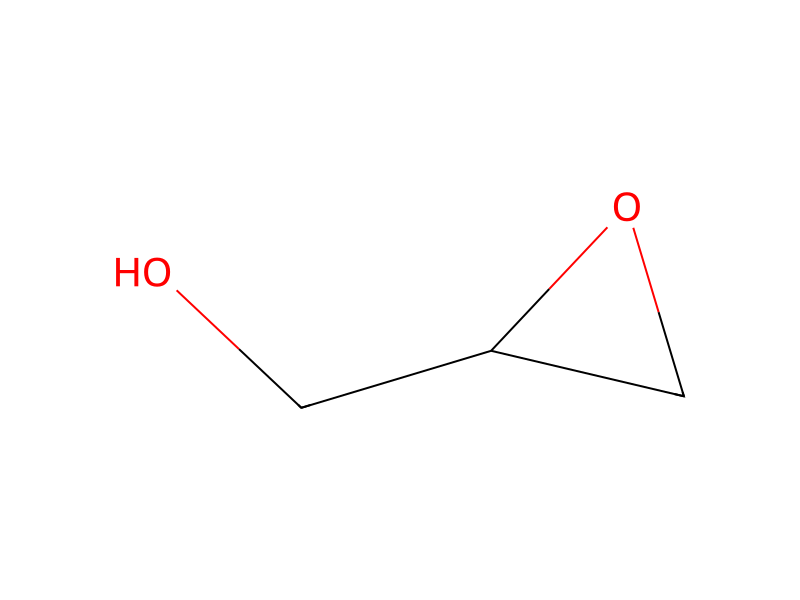
Glycidol → HCID 21928118, compound
Reaction equation

[OH:1][C:2]1[CH:7]=[CH:6][N:5]=[CH:4][CH:3]=1.[CH2:8]1[O:10][CH:9]1[CH2:11]O.C1(P(C2C=CC=CC=2)C2C=CC=CC=2)C=CC=CC=1.N(C(OCC)=O)=NC(OCC)=O>C1COCC1>[O:10]1[CH2:8][CH:9]1[CH2:11][O:1][C:2]1[CH:7]=[CH:6][N:5]=[CH:4][CH:3]=1Participants





Procedure
To a round bottom flask was added 4-hydroxypyridine (250 mg, 2.63 mmol), glycidol (194.74 mg, 2.63 mmol) and triphenylphosphine (758.45 mg, 2.89 mmol) in 20 mL of dry THF, followed by the addition of diethyl azodicarboxylate (503.6 mg, 2.89 mmol). The reaction mixture was stirred at room temperature for 18 h. The reaction mixture was concentrated in vacuo. The residue was diluted with CH2Cl2. The organic phase was washed with saturated NaHCO3 and brine. The organic phase was dried over anhydrous Na2SO4, filtered and concentrated. The residue was loaded to a flash chromatography column. The column was eluted with 0–5% MeOH/CH2Cl2. The product fractions were collected and concentrated to afford 80 mg (20.1%) of 4-oxiranylmethoxy-pyridine. (TLC: Rf=0.4, 5% MeOH/CH2Cl2, UV). MH+=152.31.
Workup
- concentrationThe reaction mixture was concentrated in vacuo
- additionThe residue was diluted with CH2Cl2
- washThe organic phase was washed with saturated NaHCO3 and brine
- dry with materialThe organic phase was dried over anhydrous Na2SO4
- filtrationfiltered
- concentrationconcentrated
- washThe column was eluted with 0–5% MeOH/CH2Cl2
- customThe product fractions were collected
- concentrationconcentrated
Sources & evidence
- ORD record
- ord-313b2191e7014ba993c5425ebec0ce6d
- Source dataset
- uspto-grants-2006_10
- Patent number
- US07119102B2
Reaction notes
Loading…