4-Methylmorpholine → HCID 57012812, compound
Reaction equation

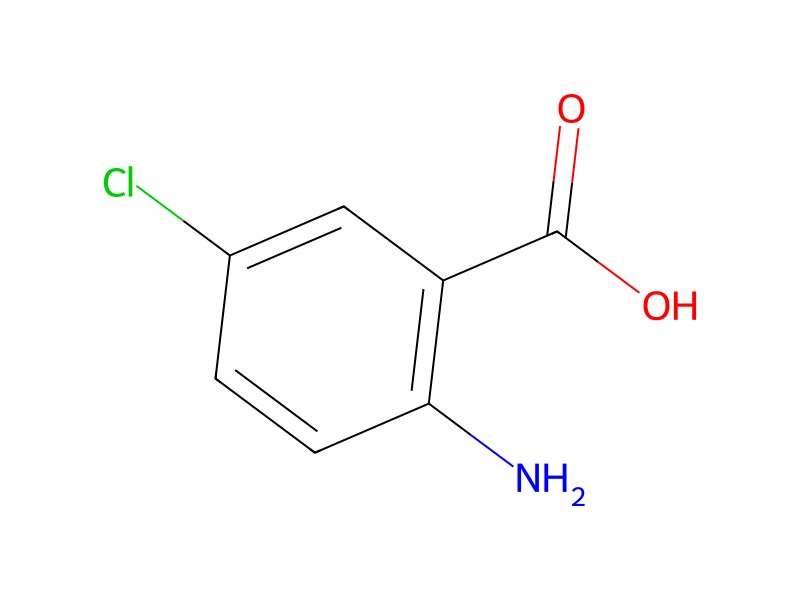
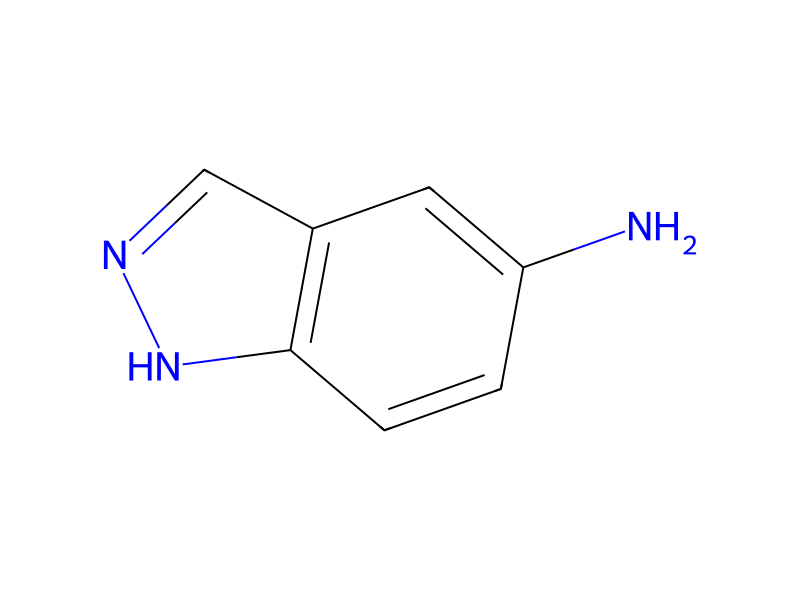
[Cl:1][C:2]1[CH:10]=[C:6]([C:7]([OH:9])=O)[C:5]([NH2:11])=[CH:4][CH:3]=1.CN1CCOCC1.[NH2:19][C:20]1[CH:21]=[C:22]2[C:26](=[CH:27][CH:28]=1)[NH:25][N:24]=[CH:23]2.F[P-](F)(F)(F)(F)F.N1(OC(N(C)C)=[N+](C)C)C2N=CC=CC=2N=N1>O.CN(C)C=O>[NH:25]1[C:26]2[C:22](=[CH:21][C:20]([NH:19][C:7](=[O:9])[C:6]3[C:5](=[CH:4][CH:3]=[C:2]([Cl:1])[CH:10]=3)[NH2:11])=[CH:28][CH:27]=2)[CH:23]=[N:24]1Participants
7
Reactant 4


Product 1

Reagents, catalysts & solvents 2


Procedure
171 mg of 5-chloroanthranilic acid is introduced into 10 ml of dimethylformamide under argon and in a moisture-free environment and mixed in succession with 253 mg of N-methylmorpholine, 266 mg of 5-aminoindazole and 456 mg of O-(7-azabenzotriazol-1-yl)-N,N,N′,N′-tetramethyluronium hexafluorophosphate (HATU) and stirred for 4 hours at room temperature. After standing overnight, it is mixed with 50 ml of water and extracted with 30 ml of ethyl acetate. The organic phase is washed with water, dried, filtered and concentrated by evaporation. The residue is chromatographed on silica gel with ethyl acetate as an eluant. 266 mg of N-(indazol-5-yl)-5-chloroanthranilic acid amide is obtained.
Workup
- waitAfter standing overnight
- extractionextracted with 30 ml of ethyl acetate
- washThe organic phase is washed with water
- customdried
- filtrationfiltered
- concentrationconcentrated by evaporation
- customThe residue is chromatographed on silica gel with ethyl acetate as an eluant
Sources & evidence
- ORD record
- ord-e2e72daa507749b4b972d1d249f320e6
- Source dataset
- uspto-grants-2006_10
- Patent number
- US07122547B1
Reaction notes
Loading…