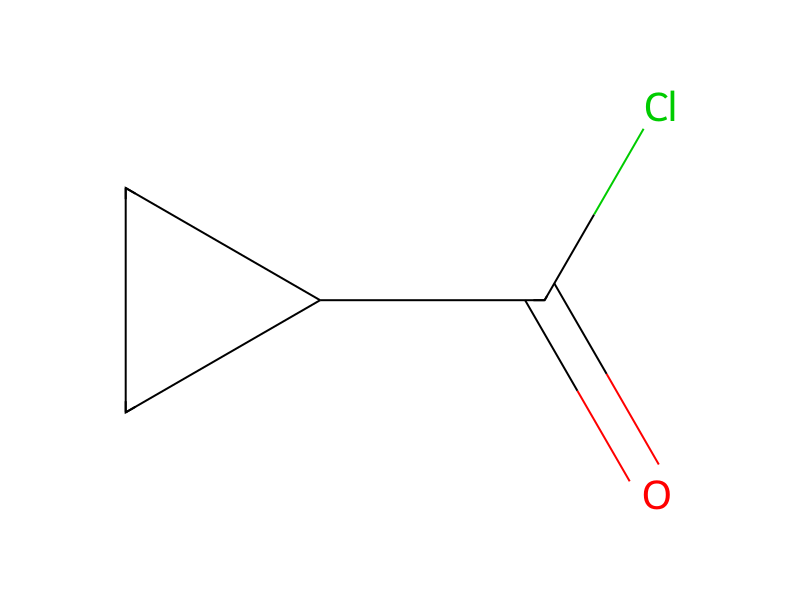
Cyclopropanecarbonyl chloride → N-[4-(6-{[(1S)-1-phenylethyl]amino}pyrazin-2-yl)phenyl]cyclopropanecarboxamide
Reaction equation

[NH2:1][C:2]1[CH:7]=[CH:6][C:5]([C:8]2[N:13]=[C:12]([NH:14][C@H:15]([C:17]3[CH:22]=[CH:21][CH:20]=[CH:19][CH:18]=3)[CH3:16])[CH:11]=[N:10][CH:9]=2)=[CH:4][CH:3]=1.[CH:23]1([C:26](Cl)=[O:27])[CH2:25][CH2:24]1>>[C:17]1([C@@H:15]([NH:14][C:12]2[N:13]=[C:8]([C:5]3[CH:4]=[CH:3][C:2]([NH:1][C:26]([CH:23]4[CH2:25][CH2:24]4)=[O:27])=[CH:7][CH:6]=3)[CH:9]=[N:10][CH:11]=2)[CH3:16])[CH:18]=[CH:19][CH:20]=[CH:21][CH:22]=1Participants
3


Procedure
In a method analogous to that reported in example 39, reaction of 6-(4-aminophenyl)-N-[(1S)-1-phenylethyl]pyrazin-2-amine (58 mg, 0.2 mmol) and cyclopropanecarbonyl chloride (25 mg, 0.24 mmol) furnished the pure product after chromatographic purification using ethyl acetate-hexane (3:2) (46 mg, 64%).
Workup
- customfurnished the pure product
- customafter chromatographic purification
Sources & evidence
- ORD record
- ord-bc63b730961541b48bb1e97fefadb5bc
- Source dataset
- uspto-grants-2006_10
- Patent number
- US07122550B2
Reaction notes
Loading…