Acetyl chloride → N-[2-(5-Chloro-2-phenylbenzo[b]thiophen-3-yl)ethyl]acetamide
Reaction equation

Cl.[Cl:2][C:3]1[CH:4]=[CH:5][C:6]2[S:10][C:9]([C:11]3[CH:16]=[CH:15][CH:14]=[CH:13][CH:12]=3)=[C:8]([CH2:17][CH2:18][NH2:19])[C:7]=2[CH:20]=1.C(=O)([O-])[O-].[K+].[K+].[C:27](Cl)(=[O:29])[CH3:28]>O.ClCCl>[Cl:2][C:3]1[CH:4]=[CH:5][C:6]2[S:10][C:9]([C:11]3[CH:16]=[CH:15][CH:14]=[CH:13][CH:12]=3)=[C:8]([CH2:17][CH2:18][NH:19][C:27](=[O:29])[CH3:28])[C:7]=2[CH:20]=1Participants
5
Reactant 3



Product 1

Reagents, catalysts & solvents 1
Procedure
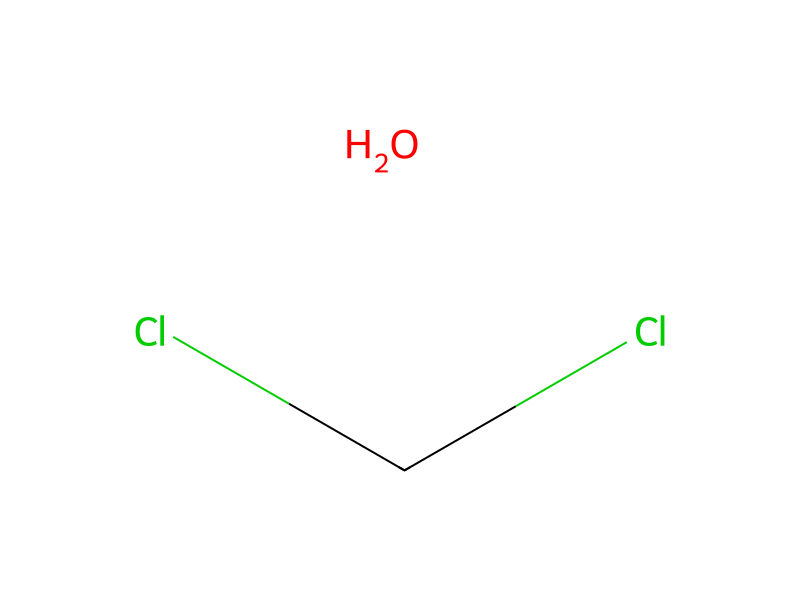
The compound obtained in Step E is dissolved in a mixture of water/dichloromethane (2/3); 2 eq. of potassium carbonate are then added and 2 eq. acetyl chloride are added dropwise. After stirring for 2 hours at ambient temperature, the 2 phases are separated; the organic phase is washed with 1M HCl and then with water, until the washing waters are neutral, and is then dried over MgSO4 and evaporated. The residue obtained is purified by chromatography on silica gel.
Workup
- customthe 2 phases are separated
- washthe organic phase is washed with 1M HCl
- dry with materialis then dried over MgSO4
- customevaporated
- customThe residue obtained
- customis purified by chromatography on silica gel
Sources & evidence
- ORD record
- ord-d0ab10287c53468ca9e0261217ed87fb
- Source dataset
- uspto-grants-2006_10
- Patent number
- US07126012B2
Reaction notes
Loading…