Triphenylphosphine → Phenyl phosphorus dichloride
Reaction equation

[P:1]([Cl:4])(Cl)[Cl:2].[C:5]1([P:11](C2C=CC=CC=2)[C:12]2[CH:17]=[CH:16][CH:15]=[CH:14][CH:13]=2)[CH:10]=[CH:9][CH:8]=[CH:7][CH:6]=1>>[Cl:2][P:1]([Cl:4])[C:5]1[CH:10]=[CH:9][CH:8]=[CH:7][CH:6]=1.[Cl:2][P:11]([C:12]1[CH:17]=[CH:16][CH:15]=[CH:14][CH:13]=1)[C:5]1[CH:10]=[CH:9][CH:8]=[CH:7][CH:6]=1Participants
4

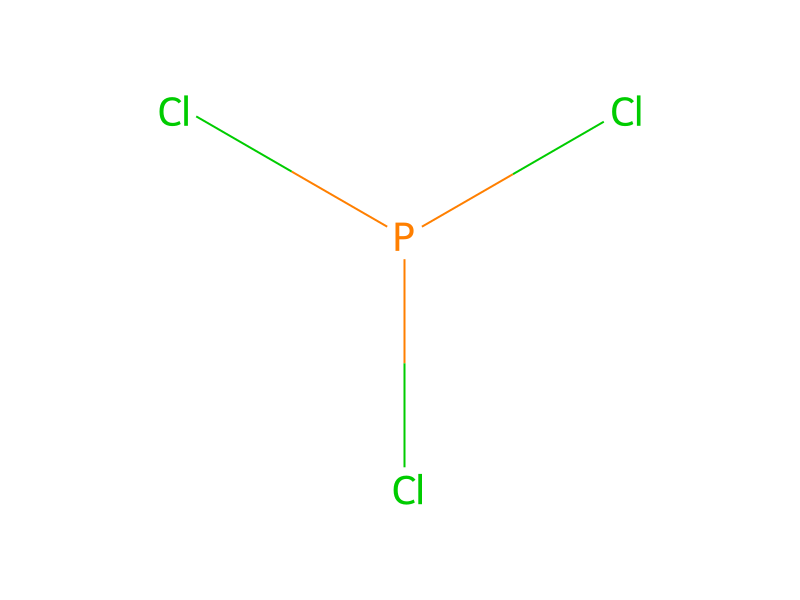


Procedure
A mixture of 60 g (=0.4364 mole) of freshly distilled phosphorus trichloride and 40 g (=0.1527 mole) of triphenylphosphane (→molar ratio 2.86 to 1) is added dropwise in the course of 20 minutes to the apparatus which has been described in Example 6 and which is at 620° C. The subsequent distillation gives 24 g (=0.134 mole) of dichlorophenylphosphane and 17 g (=0.077 mole) of chlorodiphenylphosphane (→molar ratio 1.74 to 1), unconverted phosphorus trichloride and unconverted triphenylphosphane. The yield relative to the starting amount of triphenylphosphane is 41% of theory in dichlorophenylphosphane and 47% of theory in chlorodiphenylphosphane, with a 71% conversion. The chlorophosphanes obtained are particularly pure.
Workup
- additionis added dropwise in the course of 20 minutes to the apparatus which
- customis at 620° C
- distillationThe subsequent distillation
Sources & evidence
- ORD record
- ord-ae5c15cf73b947098edcd3f17f684217
- Source dataset
- uspto-grants-1985_06
- Patent number
- US04521347
Reaction notes
Loading…