4-Chlorophenol → 1-(4-Chlorophenoxy)-3-methyl-3-trifluoromethylthio-butan-2-one
Reaction equation

[Cl:1][C:2]1[CH:7]=[CH:6][C:5]([OH:8])=[CH:4][CH:3]=1.C(=O)([O-])[O-].[K+].[K+].Br[CH2:16][C:17](=[O:26])[C:18]([CH3:25])([S:20][C:21]([F:24])([F:23])[F:22])[CH3:19]>CC(C)=O>[Cl:1][C:2]1[CH:7]=[CH:6][C:5]([O:8][CH2:16][C:17](=[O:26])[C:18]([CH3:25])([S:20][C:21]([F:24])([F:23])[F:22])[CH3:19])=[CH:4][CH:3]=1Participants
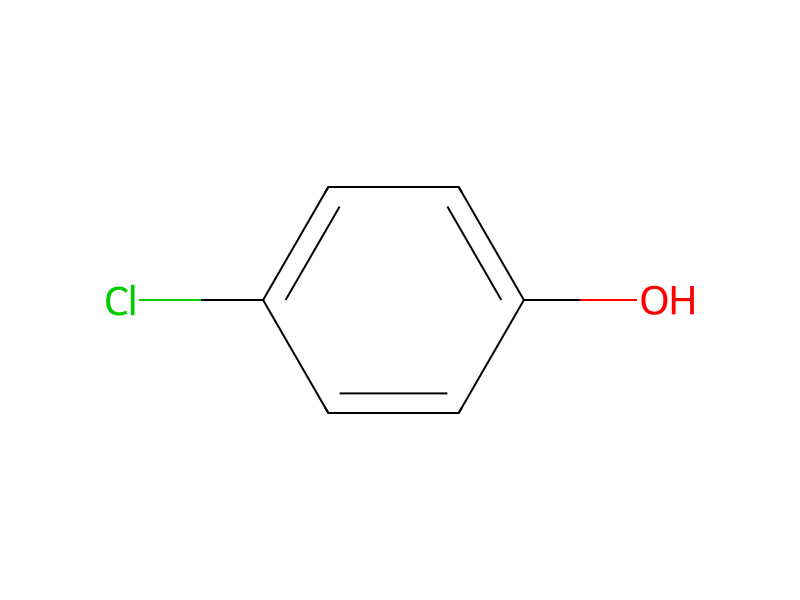




Procedure
26 g (0.21 mol) of 4-chlorophenol and 42 g (0.3 mol) of potassium carbonate were introduced into 250 ml of acetone. 53 g (0.2 mol) of 1-bromo-3-methyl-3-trifluoromethylthio-butan-2-one in 50 ml of acetone were slowly added dropwise to the mixture, under reflux. After the end of the addition, the mixture was stirred under reflux for 12 hours and was filtered, and the filtrate was concentrated. The residue was taken up in 500 ml of methylene chloride, the solution was extracted by shaking with water and sodium bicarbonate solution, and the organic phase was dried over sodium sulphate and concentrated. The residue was distilled in vacuo. 45.3 g (73% of theory) of 1-(4-chlorophenoxy)-3-methyl-3-trifluoromethylthio-butan-2-one of boiling point 105° C./0.4 mbar were obtained. ##STR14##
Workup
- temperatureunder reflux
- additionAfter the end of the addition
- temperatureunder reflux for 12 hours
- filtrationwas filtered
- concentrationthe filtrate was concentrated
- extractionthe solution was extracted
- stirringby shaking with water and sodium bicarbonate solution
- dry with materialthe organic phase was dried over sodium sulphate
- concentrationconcentrated
- distillationThe residue was distilled in vacuo
Sources & evidence
- ORD record
- ord-ea417a378649483ba1547893643a1a22
- Source dataset
- uspto-grants-1986_12
- Patent number
- US04629732
Reaction notes
Loading…