Salicylaldehyde → HCID 10899688, compound
Reaction equation

[CH:1](=[O:9])[C:2]1[C:3](=[CH:5][CH:6]=[CH:7][CH:8]=1)[OH:4].C(=O)([O-])[O-].[K+].[K+].Br[CH:17]1[CH2:22][CH2:21][CH2:20][CH:19]=[CH:18]1>CC(C)=O>[CH:1]([C:2]1[CH:8]=[CH:7][CH:6]=[CH:5][C:3]=1[O:4][CH:22]1[CH2:21][CH2:20][CH2:19][CH:18]=[CH:17]1)=[O:9]Participants
5
Reactant 3
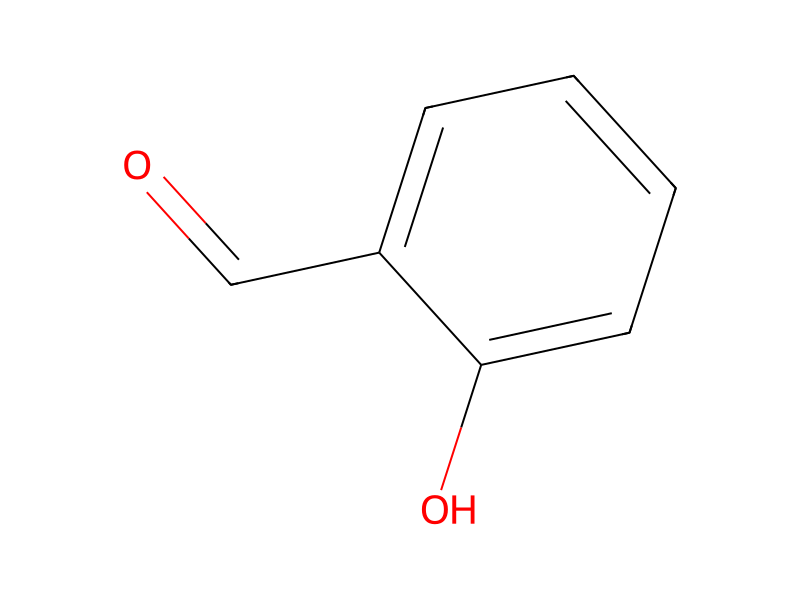


Product 1

Reagents, catalysts & solvents 1

Procedure
In a 10-liter reactor there were introduced 633.4 g (5.19 moles) of salicylaldehyde, 5 liters of acetone and 717.3 g of potassium carbonate, and the mixture was left with stirring at room temperature. After precipitation of the phenate, 836 g (5.19 moles) of 3-bromocyclohexene were rapidly added dropwise, and the mixture was brought to reflux for 21/2 hours. After removal of the inorganic salts by filtration, and evaporation of the solvent, the residue was taken up in ethyl ether, washed with 10% caustic soda and then water, and the ether phase was then dried over Na2SO4. After filtration and elimination of the ether, there were obtained 975 g of 3-(2-formylphenoxy)cyclohexene, which was used directly in the following stage.
Workup
- waitthe mixture was left
- additionwere rapidly added dropwise
- temperatureto reflux for 21/2 hours
- customAfter removal of the inorganic salts
- filtrationby filtration, and evaporation of the solvent
- washwashed with 10% caustic soda
- dry with materialwater, and the ether phase was then dried over Na2SO4
- filtrationAfter filtration and elimination of the ether
Sources & evidence
- ORD record
- ord-85daf6bea9884c8197cecc290f059289
- Source dataset
- uspto-grants-1986_12
- Patent number
- US04631277
Reaction notes
Loading…