2-Amino-2-methyl-1,3-propanediol → HCID 13817580, compound
Reaction equation

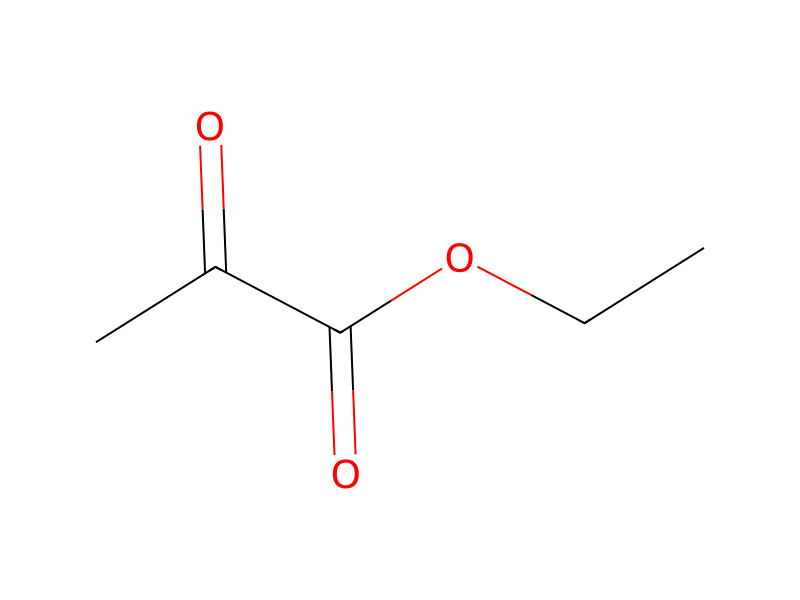
[NH2:1][C:2]([CH3:7])([CH2:5][OH:6])[CH2:3][OH:4].[C:8](OCC)(=[O:12])[C:9]([CH3:11])=O>C(O)CCC>[CH3:11][C:9]1[C:8](=[O:12])[O:4][CH2:3][C:2]([CH3:7])([CH2:5][OH:6])[N:1]=1Participants
Reactant 2

Product 1

Reagents, catalysts & solvents 1

Procedure
The results presented herein above and as shown in the schematic FIGS. 1 and 2 indicate that direct condensation of 2-amino-2-methyl-1,3-propanediol (1) with ethyl pyruvate in 1-butanol at reflux, followed by vacuum distillation, gives the 2,4-dimethyl-4-hydroxymethyl-1,3-oxazolidine-2-carboxylic acid ester of 5,6-dihydro-3,5-dimethyl-5-hydroxymethyl-1,4-oxazin-2-one (2). Evidence for the structure of the latter compound (2) is derived from elemental analysis, 1H NMR, IR and UV spectra, as well as chemical behavior. As described more specifically supra, the 1H NMR spectrum of 2 in deuteriochloroform showed four methyl singlets between 1.2 and 2.3 ppm, along with two very complex patterns between 3.3 and 4.7 ppm for the four --CH2 --O groups. The sharpness of the four methyl singlets suggests that 2 is mostly one of four possible diasteroisomers. The IR spectrum showed the bands characteristic of OH and/or NH stretching at 3000-3500, a very strong band at 1735 (C= O) and a band at 1635 cm-1 (C=N). The UV spectrum of 2 in 2-propanol solvent showed a maximum at 323 nm, characteristic of the oxazinone ring.
Workup
- temperatureat reflux
- distillationfollowed by vacuum distillation
Sources & evidence
- ORD record
- ord-0c570582f98c40579ce073b1617530d6
- Source dataset
- uspto-grants-1986_12
- Patent number
- US04632922
Reaction notes
Loading…