Sodium Carbonate → 5-butylthiophene-2-carbaldehyde
Reaction equation

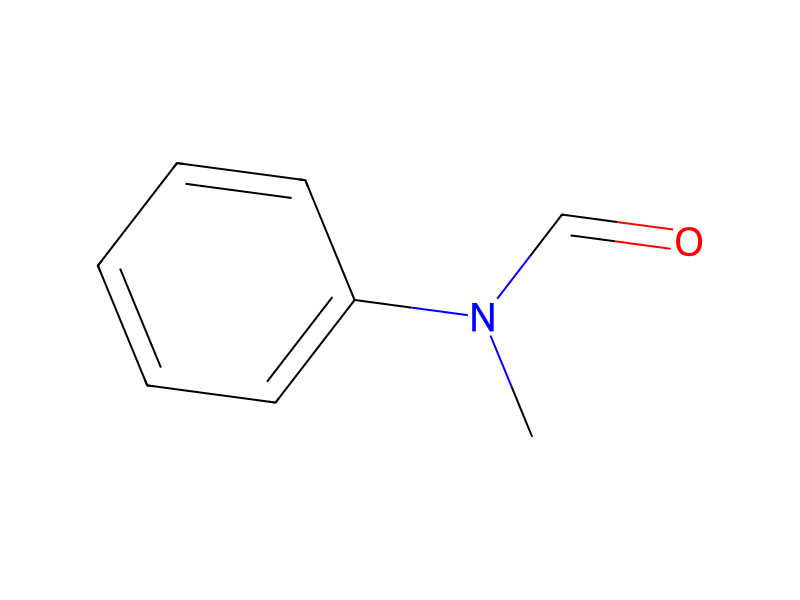
[CH2:1]([C:5]1[S:9][C:8]([C@@H:10]2C[C@H]2CN2C[C@H](C)O[C@H](C)C2)=[CH:7][CH:6]=1)[CH2:2][CH2:3][CH3:4].P(Cl)(Cl)(Cl)=[O:23].CN(C=O)C1C=CC=CC=1.C(C1SC=CC=1)CCC.C(=O)([O-])[O-].[Na+].[Na+]>>[CH2:1]([C:5]1[S:9][C:8]([CH:10]=[O:23])=[CH:7][CH:6]=1)[CH2:2][CH2:3][CH3:4]Participants




Conditions
- Temperature
- 0 °C
Procedure
This Example illustrates the preparation of 4-[2-(5-n-butylthiophen-2-yl)-trans-cyclopropylmethyl]-2,6-cis-dimethylmorpholine (Compound No. 8 in Table I). Phosphorus oxychloride (12.02 g, 0.078 mol) was added dropwise to N-methylformanilide (10.62 g, 0.079 mol) and a yellow solid was produced. This was cooled to 0° C. for 1/2 hour, then 2-n-butylthiophene (10 g, 0.071 mol) was added dropwise and the mixture stirred at room temperature for 3 hours. The mixture was poured into ice/water, neutralised with sodium carbonate and extracted into diethyl ether. The ethereal extracts were washed with water, dried over anhydrous sodium sulphate and the solvent removed to give a brown oil. Purification by column chromatography (silica eluted with petroleum ether/ethyl acetate 9:1) gave 5-n-butyl-2-thiophenecarboxaldehyde (11.8 g, 99%). Sodium hydride (6.63 g-50% suspension in oil, 0.138 mol) was washed with petroleum ether, suspended in dry DMSO (100 ml) and heated with stirring at 60°-70° C. for 2 hours. The reaction mixture was then cooled to 15° C. and methyltriphenylphosphonium bromide (48.72 g, 0.136 mol) was added portionwise with rapid stirring over a 1/2 hour period. The reaction mixture was stirred at room temperature for a further 1 hour after the addition and 5-n-butyl-2-thiophenecarboxaldehyde (23 g, 0.137 mol) was added dropwise over a period of 1 hour. The resultant reaction mixture was stirred at room temperature for 12 hours, poured into water (300 ml) and extracted with ether (4×150 ml). The ethereal extracts were washed with water (4×100 ml) and dried over anhydrous sodium sulphate. Removal of the solvent gave a yellow oil which was purified by column chromatography (silica eluted with petroleum ether/ethyl acetate 9:1) to give (5-n-butylthiophen-2-yl)-ethylene (18.5 g, 82%). Ethyl diazoacetate (13.0 g, 0.11 mol) in dry dichloromethane (150 ml) was added dropwise to a solution of (5-n-butylthiophen-2-yl)-ethylene (18.3 g, 0.11 mol) and anhydrous copper (II) sulphate (0.3 g) in dry dichloromethane (50 ml) at 90° C. by means of a syringe pump over a period of 5 hours. The dichloromethane was distilled over during the addition. After complete addition the remaining dichloromethane was removed in vacuo and the resulting brown oil purified by column chromatography (silica eluted with petroleum ether/ethyl acetate 1:1) to give ethyl 2-(5-n-butylthiophen-2-yl)-cyclopropanecarboxylate (18 g, 71%).
Workup
- customa yellow solid was produced
- extractionextracted into diethyl ether
- washThe ethereal extracts were washed with water
- dry with materialdried over anhydrous sodium sulphate
- customthe solvent removed
- customto give a brown oil
- customPurification
- washby column chromatography (silica eluted with petroleum ether/ethyl acetate 9:1)
Sources & evidence
- ORD record
- ord-3b9d973c6e084a6682041a888e56140d
- Source dataset
- uspto-grants-1988_05
- Patent number
- US04743602
Reaction notes
Loading…