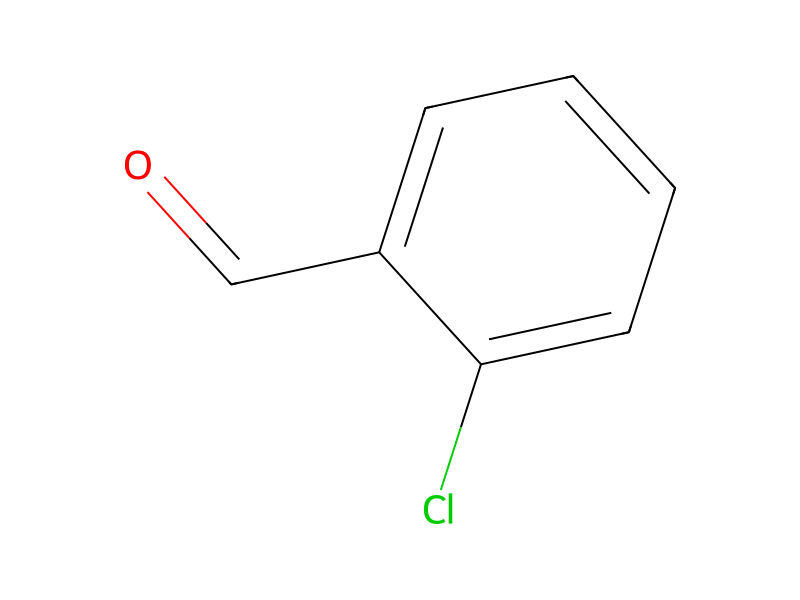
2-Chlorobenzaldehyde → HCID 20138985, compound
Reaction equation

[Cl:1][C:2]1[C:11]2[C:6](=[CH:7][CH:8]=[CH:9][CH:10]=2)[CH:5]=[CH:4][C:3]=1[CH2:12][C:13]#[N:14].[Cl:15][C:16]1[CH:23]=[CH:22][CH:21]=[CH:20][C:17]=1[CH:18]=O.[OH-:24].[NH4+]>O>[Cl:1][C:2]1[C:11]2[CH:10]=[CH:9][CH:8]=[CH:7][C:6]=2[CH:5]=[C:4]2[C:3]=1[CH2:12][C:13](=[O:24])[NH:14][CH:18]2[C:17]1[CH:20]=[CH:21][CH:22]=[CH:23][C:16]=1[Cl:15]Participants
Reactant 3


Product 1

Reagents, catalysts & solvents 1

Conditions
- Temperature
- 130 °C
Procedure
This material was prepared in a similar manner to that described in Acta Chimica Academie Scientarum Hungaricae, Tomus 108(3), 255, (1981). Thus a mixture of 1-chloro-2-naphthylacetonitrile (25 g) and polyphosphoric acid (100 g) was heated and stirred at 80° for 30 min. 2-Chlorobenzaldehyde (8.7 g) was added with stirring over 30 min. The mixture was heated at 130° C. for 3 hours, cooled and poured into water. 0.88 Ammonium hydroxide was added and the mixture left overnight. The precipitate was filtered off and refluxed in 5% sodium hydroxide. The mixture was filtered hot after 2 hours and the product chromatographed (silica gel, chloroform as eluant) to give 5-chloro-1-(2'-chlorophenyl)-1,4-dihydrobenzo[g]isoquinol-3-one (5.3 g) m.p. 252°-254° C.
Workup
- customThis material was prepared in a similar manner to that
- temperaturewas heated
- stirringwith stirring over 30 min
- temperaturecooled
- waitthe mixture left overnight
- filtrationThe precipitate was filtered off
- temperaturerefluxed in 5% sodium hydroxide
- filtrationThe mixture was filtered hot after 2 hours
- customthe product chromatographed (silica gel, chloroform as eluant)
Sources & evidence
- ORD record
- ord-7afc1dbc08d048189097b62f56d4fc08
- Source dataset
- uspto-grants-1988_05
- Patent number
- US04745115
Reaction notes
Loading…