Pivalic acid → Buthidazolamine
Reaction equation

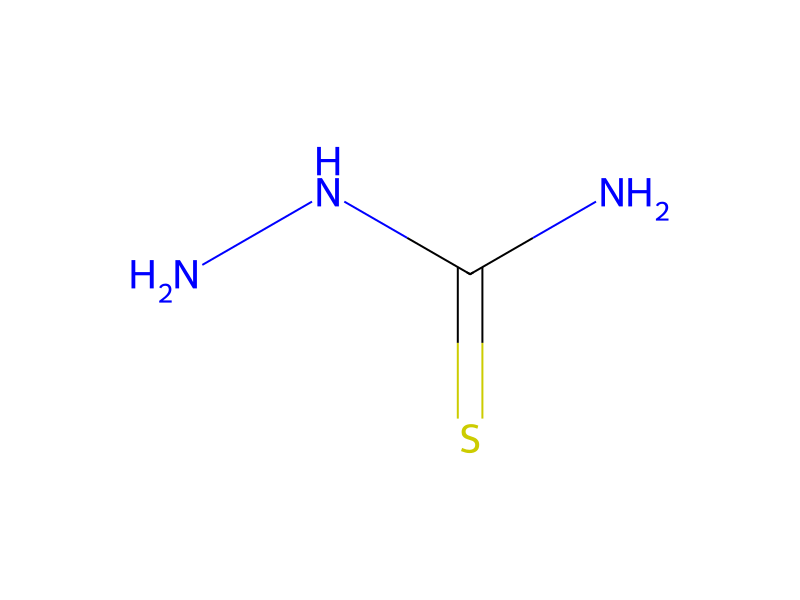
[C:1](O)(=O)[C:2]([CH3:5])([CH3:4])[CH3:3].[NH:8]([C:10](=[S:12])[NH2:11])[NH2:9].[OH-].[NH4+]>S(=O)(=O)(O)O>[C:2]([C:1]1[S:12][C:10]([NH2:11])=[N:8][N:9]=1)([CH3:5])([CH3:4])[CH3:3]Participants
5
Reactant 3


Product 1

Reagents, catalysts & solvents 1

Conditions
- Temperature
- 2 °C
Procedure
To a solution of pivalic acid (85.1 g, 0.833 mol) in concentrated sulfuric acid (280 ml) was slowly added hydrazinecarbothioamide (76.0 g, 0.833 mol) such that the internal temperature was maintained at 0-4° C. After addition was complete, the resulting mixture was heated to 80° C. and monitored by TLC. After the reaction was complete, the resulting yellow solution was cooled to room temperature, poured into ice, and then adjusted the pH to 7 by the addition of aqueous ammonium hydroxide. The resulting precipitate was filtered to obtain 5-tert-butyl-1,3,4-thiadiazol-2-amine which was used directly without purification.
Workup
- additionAfter addition
- temperaturethe resulting mixture was heated to 80° C.
- temperaturethe resulting yellow solution was cooled to room temperature
- additionpoured into ice
- filtrationThe resulting precipitate was filtered
Sources & evidence
- ORD record
- ord-9d57959eed67414fa68a87fdc194c837
- Source dataset
- uspto-grants-2013_06
- Patent number
- US08455477B2
Reaction notes
Loading…