Potassium Carbonate → 5-Bromo-3-propyl-3H-benzooxazol-2-one
Reaction equation

[Br:1][C:2]1[CH:3]=[CH:4][C:5]2[O:9][C:8](=[O:10])[NH:7][C:6]=2[CH:11]=1.[CH2:12](I)[CH2:13][CH3:14].C(=O)([O-])[O-].[K+].[K+]>O1CCOCC1>[Br:1][C:2]1[CH:3]=[CH:4][C:5]2[O:9][C:8](=[O:10])[N:7]([CH2:12][CH2:13][CH3:14])[C:6]=2[CH:11]=1Participants
5
Reactant 3


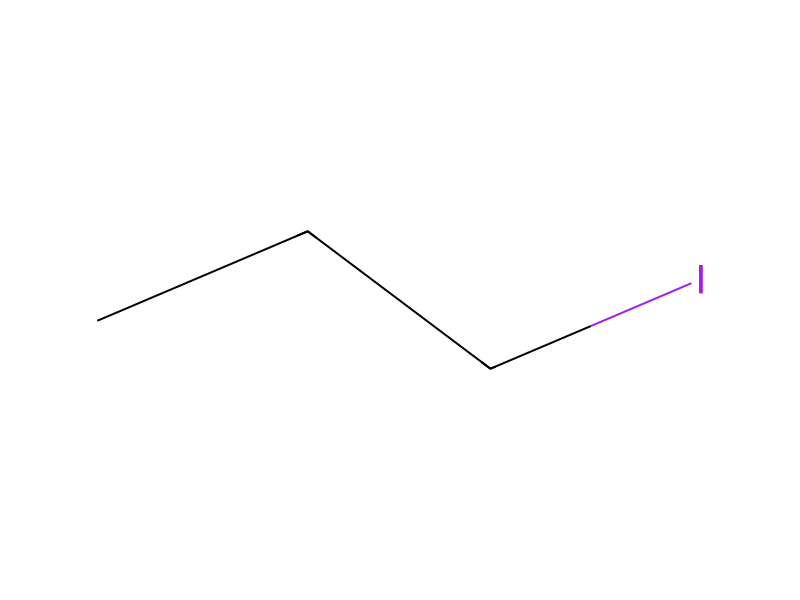
Product 1

Reagents, catalysts & solvents 1

Procedure
A 100 mL round-bottomed flask was charged with 5-bromo-2-benzoxazolinone (0.750 g, 3.50 mmol), n-propyl iodide (0.684 mL, 7.01 mmol), potassium carbonate (1.211 g, 8.76 mmol) and Dioxane (5 mL). The reaction mixture was stirred at room temperature for overnight. The reaction was quenched with water. Colorless precipitate was collected through filtration and 5-Bromo-3-propyl-3H-benzooxazol-2-one was obtained, ESI-MS: m/z 258.2 (M+H)+
Workup
- customThe reaction was quenched with water
- filtrationColorless precipitate was collected through filtration
Sources & evidence
- ORD record
- ord-b59298d97c474a83a436190cc9ef2b78
- Source dataset
- uspto-grants-2013_06
- Patent number
- US08455522B2
Reaction notes
Loading…