Pyridine → HCID 57544763, compound
Reaction equation

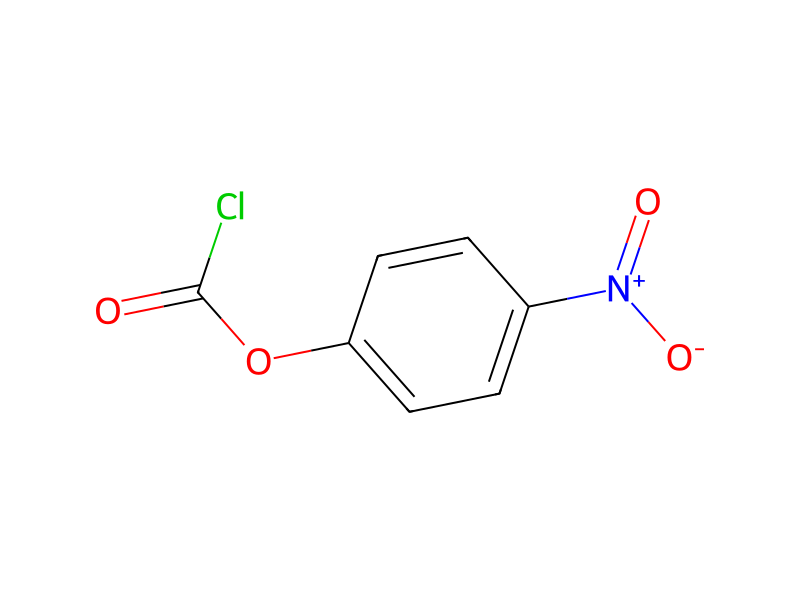
Cl[C:2]([O:4][C:5]1[CH:10]=[CH:9][C:8]([N+:11]([O-:13])=[O:12])=[CH:7][CH:6]=1)=[O:3].[NH2:14][C@H:15]1[CH2:20][CH2:19][CH2:18][N:17]([C:21]([O:23][C:24]([CH3:27])([CH3:26])[CH3:25])=[O:22])[CH2:16]1.N1C=CC=CC=1>C(Cl)Cl>[N+:11]([C:8]1[CH:9]=[CH:10][C:5]([O:4][C:2]([NH:14][C@H:15]2[CH2:20][CH2:19][CH2:18][N:17]([C:21]([O:23][C:24]([CH3:27])([CH3:26])[CH3:25])=[O:22])[CH2:16]2)=[O:3])=[CH:6][CH:7]=1)([O-:13])=[O:12]Participants
5
Reactant 3


Product 1

Reagents, catalysts & solvents 1

Procedure
To a stirred solution 4-nitrophenyl chloroformate (26.0 mg, 0.13 mmol) in anhydrous CH2Cl2 was added a solution of (S)-tert-butyl 3-aminopiperidine-1-carboxylate (27.0 mg, 0.13 mmol) and pyridine (7 μL) in CH2Cl2 (0.5 mL). The mixture was stirred for 30 min. LC-MS showed complete conversion. This intermediate was used as a solution for the next step.
Sources & evidence
- ORD record
- ord-47185019806d4bf08c3baf3e7348d390
- Source dataset
- uspto-grants-2013_06
- Patent number
- US08455521B2
Reaction notes
Loading…