Water → 1-(7-Bromo-[1,5]naphthyridin-2-yl)-3-phenethyl-urea
Reaction equation

[Br:1][C:2]1[CH:11]=[C:10]2[C:5]([CH:6]=[CH:7][C:8]([NH2:12])=[N:9]2)=[N:4][CH:3]=1.ClC(Cl)(O[C:17](=[O:23])OC(Cl)(Cl)Cl)Cl.[C:25]1([CH2:31][CH2:32][NH2:33])[CH:30]=[CH:29][CH:28]=[CH:27][CH:26]=1.O>N1C=CC=CC=1>[Br:1][C:2]1[CH:11]=[C:10]2[C:5]([CH:6]=[CH:7][C:8]([NH:12][C:17]([NH:33][CH2:32][CH2:31][C:25]3[CH:30]=[CH:29][CH:28]=[CH:27][CH:26]=3)=[O:23])=[N:9]2)=[N:4][CH:3]=1Participants
6
Reactant 4

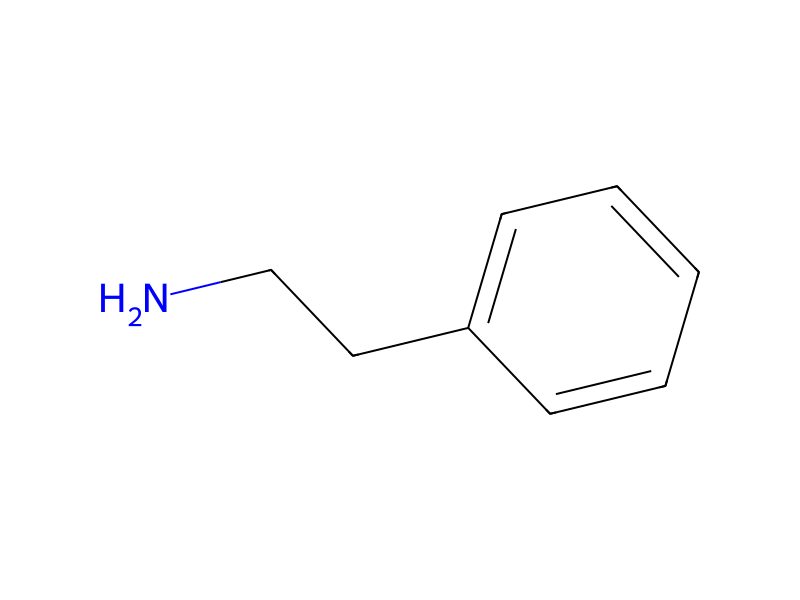


Product 1

Reagents, catalysts & solvents 1

Procedure
Under argon atmosphere, 201 mg (897 μmol, 1 eq) of 7-bromo-[1,5]naphthyridin-2-ylamine and 294 mg (993 μmol, 1.1 eq) of triphosgene were introduced in 10 mL of pyridine at 0° C. The mixture was stirred at reflux for 1 h. The mixture was allowed to reach rt and 238 μL (1.89 mmol, 2.1 eq) of 2-phenylethylamine were added. The mixture was stirred at reflux for 1 h. The mixture was allowed to reach rt and water was added. Aqueous layer was extracted with methylene chloride. Organic layers were dried over Na2SO4, filtered and evaporated to dryness. The residue was purified by column chromatography using methylene chloride/ethanol: 96/4 as eluent. The solvent was evaporated to dryness to afford 80 mg of yellow powder with 24% yield.
Workup
- temperatureat reflux for 1 h
- customto reach rt
- stirringThe mixture was stirred
- temperatureat reflux for 1 h
- customto reach rt
- extractionAqueous layer was extracted with methylene chloride
- dry with materialOrganic layers were dried over Na2SO4
- filtrationfiltered
- customevaporated to dryness
- customThe residue was purified by column chromatography
- customThe solvent was evaporated to dryness
Sources & evidence
- ORD record
- ord-e64aa84016fb4ff7b0f1ebeca9d33bf2
- Source dataset
- uspto-grants-2013_06
- Patent number
- US08461178B2
Reaction notes
Loading…