Pyridine → HCID 66614307, compound
Reaction equation

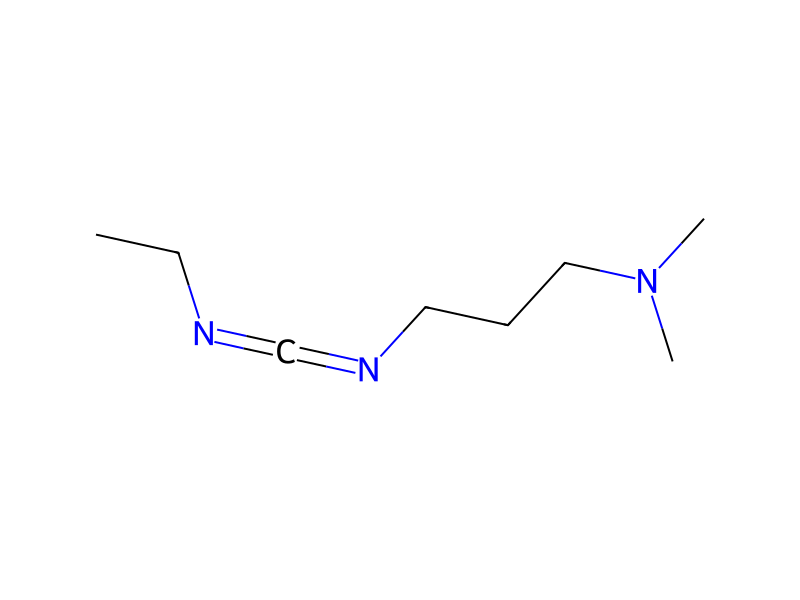
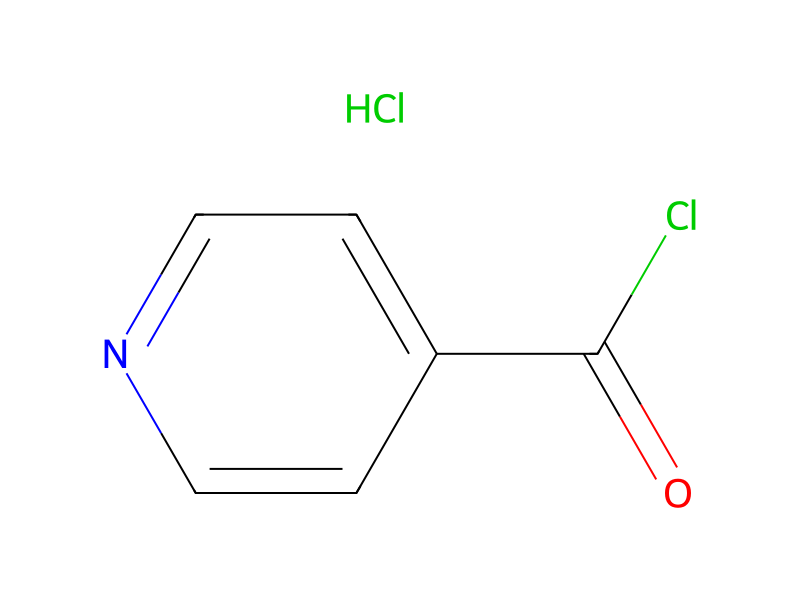
[CH2:1]([NH:3][C:4]1[C:5]([NH2:14])=[CH:6][C:7]([C:10]([F:13])([F:12])[F:11])=[CH:8][CH:9]=1)[CH3:2].Cl.[C:16](Cl)(=O)[C:17]1[CH:22]=[CH:21][N:20]=[CH:19][CH:18]=1.N1C=CC=CC=1.CCN=C=NCCCN(C)C>O>[CH2:1]([N:3]1[C:4]2[CH:9]=[CH:8][C:7]([C:10]([F:11])([F:13])[F:12])=[CH:6][C:5]=2[N:14]=[C:16]1[C:17]1[CH:22]=[CH:21][N:20]=[CH:19][CH:18]=1)[CH3:2]Participants
Reactant 4


Product 1

Reagents, catalysts & solvents 1

Conditions
- Temperature
- 60 °C
Procedure
A mixture of 1.0 g of N1-ethyl-4-trifluoromethylbenzene-1,2-diamine, 1.05 g of isonicotinoyl chloride hydrochloride and 15 ml of pyridine was stirred for 4 hours at 60° C. Then, 0.94 g of WSC was added, and the mixture was stirred for 8 hours at 80° C. The reaction mixture was cooled down to room temperature. Into the reaction mixture was poured water, and the mixture was extracted twice with ethyl acetate. The organic layer was washed with water and saturated saline, then, dried over magnesium sulfate, and concentrated under reduced pressure. The residue was subjected to silica gel column chromatography to obtain 0.65 g of 1-ethyl-2-(pyridin-4-yl)-5-trifluoromethyl-1H-benzimidazole (hereinafter, referred to as present active compound 221).
Workup
- stirringthe mixture was stirred for 8 hours at 80° C
- temperatureThe reaction mixture was cooled down to room temperature
- extractionthe mixture was extracted twice with ethyl acetate
- washThe organic layer was washed with water and saturated saline
- dry with materialdried over magnesium sulfate
- concentrationconcentrated under reduced pressure
Sources & evidence
- ORD record
- ord-51d0f57bf9584e75813f76dabd2a8f18
- Source dataset
- uspto-grants-2013_06
- Patent number
- US08461181B2
Reaction notes
Loading…