Triphenylphosphine → Methyl 4-bromo-5-methylfuran-2-carboxylate
Reaction equation

[Br:1][C:2]1[CH:3]=[C:4]([C:8]([O:10][CH3:11])=[O:9])[O:5][C:6]=1Br.[C:12]1(P(C2C=CC=CC=2)C2C=CC=CC=2)C=CC=CC=1.C[Zn]Cl.[Cl-].[NH4+]>Cl[Pd]Cl.O1CCCC1>[Br:1][C:2]1[CH:3]=[C:4]([C:8]([O:10][CH3:11])=[O:9])[O:5][C:6]=1[CH3:12]Participants
7
Reactant 4




Product 1

Reagents, catalysts & solvents 2

Procedure
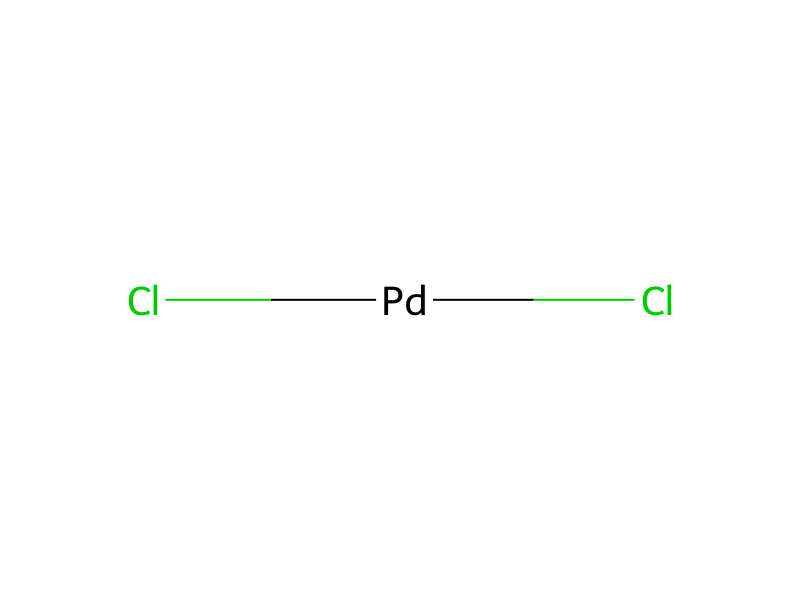
To a mixture of the compound (1.80 g) obtained in Example 128a, palladium chloride(II) (0.02 g), triphenylphosphine (0.07 g) and tetrahydrofuran (30 mL) was added MeZnCl (2M tetrahydrofuran solution, 9.5 ml), and the mixture was heated under reflux for 4 hr under a nitrogen atmosphere. The reaction mixture was cooled to room temperature, saturated aqueous ammonium chloride was added, and the mixture was extracted with ethyl acetate. The ethyl acetate layer was washed with saturated brine, dried over magnesium sulfate, and concentrated under reduced pressure. The residue was purified by column chromatography (carrier: silica gel, eluent: hexane ethyl acetate) to give the title compound (1.07 g) as a colorless solid.
Workup
- temperaturethe mixture was heated
- temperatureunder reflux for 4 hr under a nitrogen atmosphere
- extractionthe mixture was extracted with ethyl acetate
- washThe ethyl acetate layer was washed with saturated brine
- dry with materialdried over magnesium sulfate
- concentrationconcentrated under reduced pressure
- customThe residue was purified by column chromatography (carrier: silica gel, eluent: hexane ethyl acetate)
Sources & evidence
- ORD record
- ord-5f3bca02527d470a924e211a0b5035a5
- Source dataset
- uspto-grants-2013_06
- Patent number
- US08461348B2
Reaction notes
Loading…