Trichloroisocyanuric Acid → 6-Chloro-2-phenylpyrimidine-4-carboxylic acid
Reaction equation

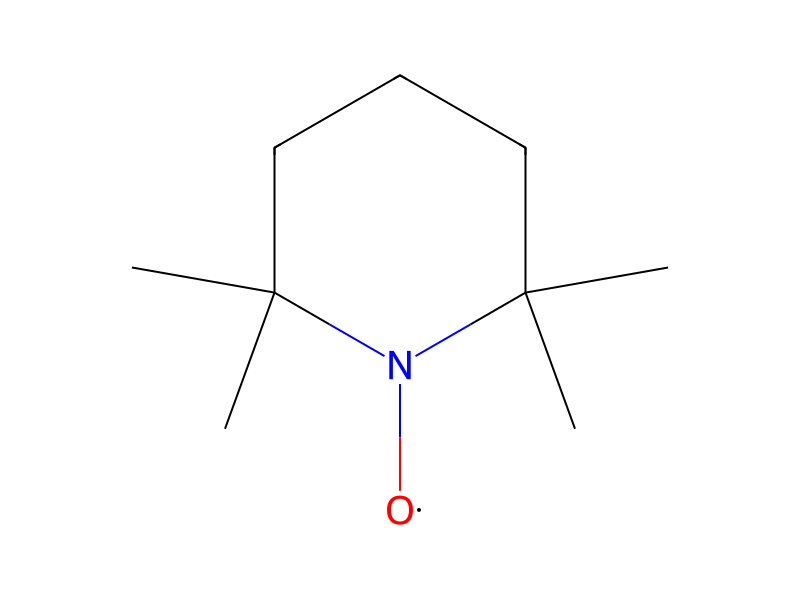
[Cl:1][C:2]1[N:7]=[C:6]([C:8]2[CH:13]=[CH:12][CH:11]=[CH:10][CH:9]=2)[N:5]=[C:4]([CH2:14][OH:15])[CH:3]=1.C([O-])(O)=[O:17].[Na+].[Na+].[Br-].C1(N(Cl)C(=O)N(Cl)C(=O)N1Cl)=O>CC(C)=O.CC1(C)N([O])C(C)(C)CCC1>[Cl:1][C:2]1[N:7]=[C:6]([C:8]2[CH:13]=[CH:12][CH:11]=[CH:10][CH:9]=2)[N:5]=[C:4]([C:14]([OH:17])=[O:15])[CH:3]=1Participants






Conditions
- Temperature
- 5 °C
Procedure
To a solution of (6-chloro-2-phenyl-pyrimidin-4-yl)-methanol (240 g; prepared using a method analogous to the one described in WO 2006/114774, Example 24, intermediate 24.2) in acetone (2 L) was added an aq. NaHCO3 solution (15%, 961 mL). The mixture was cooled down to 5° C. and NaBr (11.2 g) followed by TEMPO (8.56 g) were added. TCCA (506 g) was then added portionwise over 1.5 h. The resulting mixture was stirred at RT for 1.5 h. The mixture was filtered through a pad of Celite and the solution was evaporated off. The residue was diluted in water/EA. The aq. phase was extracted with EA and the combined org. phases were dried (Na2SO4) and evaporated off. Recrystallization of the residue (EA/Hept) afforded the desired product as a beige solid (162.1 g).
Workup
- customprepared
- additionwere added
- filtrationThe mixture was filtered through a pad of Celite
- customthe solution was evaporated off
- additionThe residue was diluted in water/EA
- extractionThe aq. phase was extracted with EA
- dry with materialphases were dried (Na2SO4)
- customevaporated off
- customRecrystallization of the residue (EA/Hept)
Sources & evidence
- ORD record
- ord-b7ea497918924aa19b854d7fc8653f15
- Source dataset
- uspto-grants-2013_06
- Patent number
- US08466156B2
Reaction notes
Loading…