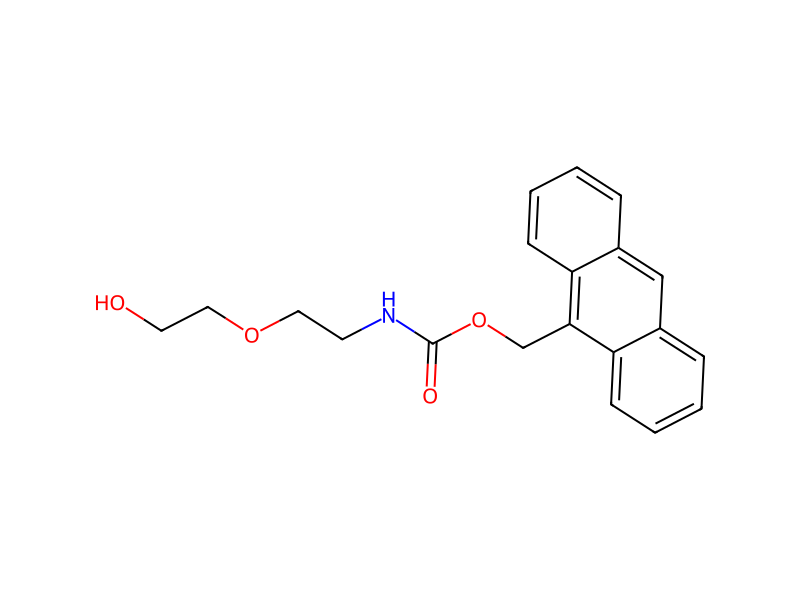
Triethylamine → [2-(2-Hydroxy-ethoxy)-ethyl]-carbamic acid anthracen-9-ylmethyl ester
Reaction equation

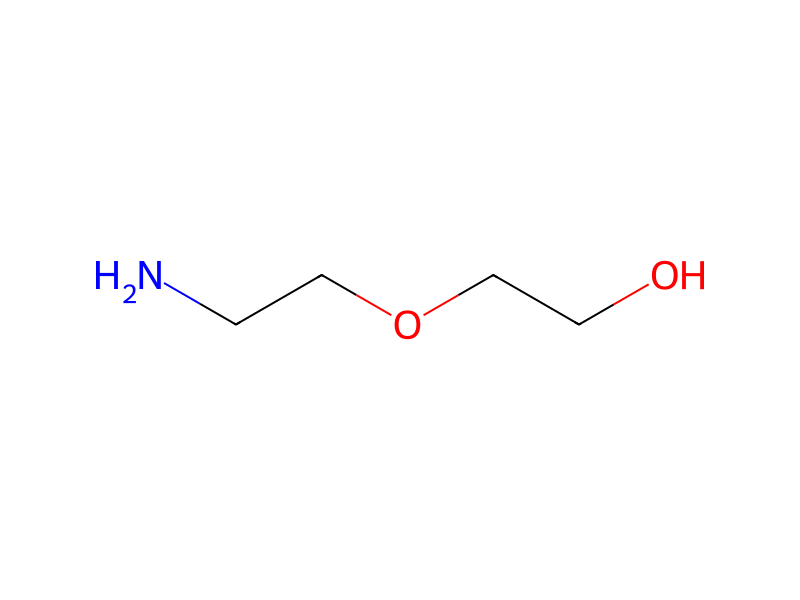
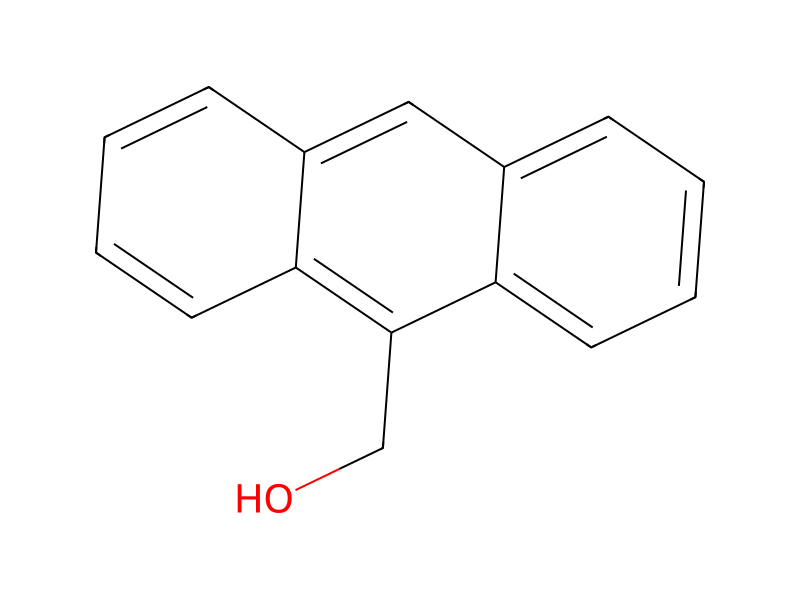
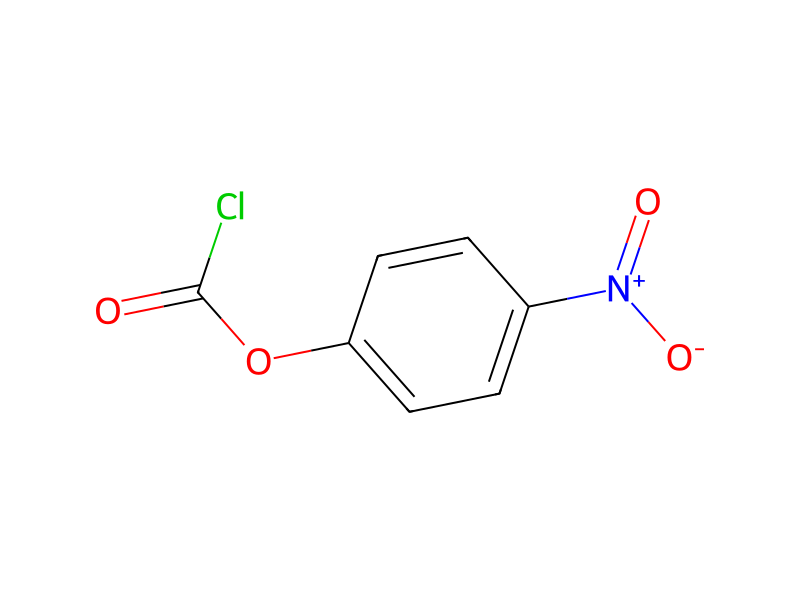
[CH:1]1[C:14]2[C:5](=[CH:6][C:7]3[C:12]([C:13]=2[CH2:15][OH:16])=[CH:11][CH:10]=[CH:9][CH:8]=3)[CH:4]=[CH:3][CH:2]=1.Cl[C:18](OC1C=CC([N+]([O-])=O)=CC=1)=[O:19].C(N(CC)CC)C.[NH2:37][CH2:38][CH2:39][O:40][CH2:41][CH2:42][OH:43]>C(Cl)Cl.[Au]>[CH:11]1[C:12]2[C:7](=[CH:6][C:5]3[C:14]([C:13]=2[CH2:15][O:16][C:18](=[O:19])[NH:37][CH2:38][CH2:39][O:40][CH2:41][CH2:42][OH:43])=[CH:1][CH:2]=[CH:3][CH:4]=3)[CH:8]=[CH:9][CH:10]=1Participants
7
Reactant 4

Product 1
Reagents, catalysts & solvents 2

Procedure
To a stirring slurry of 9-anthracenemethanol (10 g, 48 mmol) and 4-nitrophenyl chloroformate (13.6 g, 67.5 mmol) in 200 ml CH2Cl2 was added triethylamine (6.7 ml, 0.19 mol). The resulting gold colored solution was allowed to stir 16 hrs at room temperature. At this point, 2-(2-aminoethoxy)ethanol (14.4 ml, 0.144 mol) was added and stirring continued for another 24 hours. The CH2Cl2 reaction mixture was then washed with a 2% sodium hydroxide (w/w) solution until no p-nitrophenol was observed in the organic layer. The dichloromethane was dried with sodium sulfate, filtered, and evaporated under reduced pressure.
Workup
- stirringstirring
- waitcontinued for another 24 hours
- washwas then washed with a 2% sodium hydroxide (w/w) solution until no p-nitrophenol
- dry with materialThe dichloromethane was dried with sodium sulfate
- filtrationfiltered
- customevaporated under reduced pressure
Sources & evidence
- ORD record
- ord-918ea67786b346f3a7f9a6e015623f50
- Source dataset
- uspto-grants-2013_06
- Patent number
- US08466269B2
Reaction notes
Loading…