2,2'-Bipyridine → HCID 21546549, compound
Reaction equation

N1C=CC=CC=1C1C=CC=CN=1.[CH2:13]=[C:14]([CH3:16])[CH3:15].[C:17]([O:21][CH2:22][CH2:23][CH2:24][CH3:25])(=[O:20])[CH:18]=[CH2:19]>C1COCC1>[CH3:15][C:14](=[CH2:13])[CH3:16].[C:17]([O:21][CH2:22][CH2:23][CH2:24][CH3:25])(=[O:20])[CH:18]=[CH2:19]Participants
Reactant 3


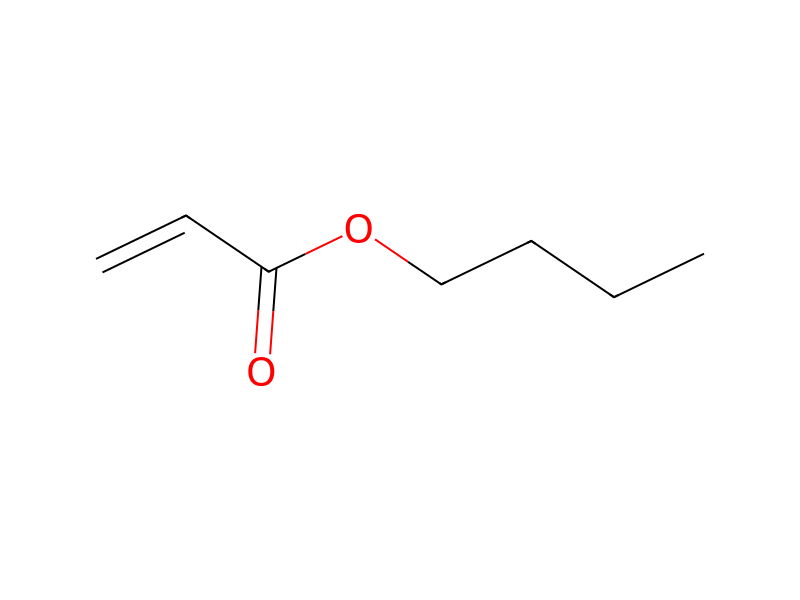
Product 1

Reagents, catalysts & solvents 1

Conditions
- Temperature
- 50 °C
Procedure
To 0.11 g (6.68×10⁻⁴ mole) 2,2′-bipyridine and 0.036 g (2.34×10⁻⁴ mole) CuBr at −30° C. in a glass tube, was added 1.75 mL (2×10⁻² mole) isobutene, 0.5 mL (0.55×10⁻² mole) butyl acrylate (BA) and 0.040 mL (2.34×10⁻⁴ mole) diethyl methyl bromomalonate under an argon atmosphere. The glass tube was sealed under vacuum and the reaction mixture warmed to 50° C. for 12 hours. The reaction mixture was then dissolved in THF and the conversion of BA as determined by GC was 100%. The polymer was then precipitated into methanol (three times), filtered, dried at 60° C. under vacuum for 48 h and weighted. Mn=3180, Mw/Mn=1.38 (Mth=3400). The content of isobutene in the copolymer was determined by integration of C(O)OCH2 from butyl acrylate and the gem-dimethyl region of the 1H-NMR spectrum was 49%. The Tg of product, as determined by DSC, was −48° C.
Workup
- customThe glass tube was sealed under vacuum
- customThe polymer was then precipitated into methanol (three times)
- filtrationfiltered
- customdried at 60° C. under vacuum for 48 h
- customwas −48° C.
Sources & evidence
- ORD record
- ord-6b28539b44a14cd4a9c4c0fc245c1c3b
- Source dataset
- uspto-grants-2003_04
- Patent number
- US06541580B1
Reaction notes
Loading…