1-Bromopropane → N-(8-propyl-8-azabicyclo[3.2.1]oct-3-yl)-4-methyl-1H-indazol-5-amine
Reaction equation

C(=O)([O-])[O-].[K+].[K+].[CH3:7][CH2:8][CH2:9]Br.[CH:11]12[NH:18][CH:15]([CH2:16][CH2:17]1)[CH2:14][CH:13]([NH:19][C:20]1[C:21]([CH3:29])=[C:22]3[C:26](=[CH:27][CH:28]=1)[NH:25][N:24]=[CH:23]3)[CH2:12]2>CN(C)C=O>[CH2:9]([N:18]1[CH:15]2[CH2:16][CH2:17][CH:11]1[CH2:12][CH:13]([NH:19][C:20]1[C:21]([CH3:29])=[C:22]3[C:26](=[CH:27][CH:28]=1)[NH:25][N:24]=[CH:23]3)[CH2:14]2)[CH2:8][CH3:7]Participants
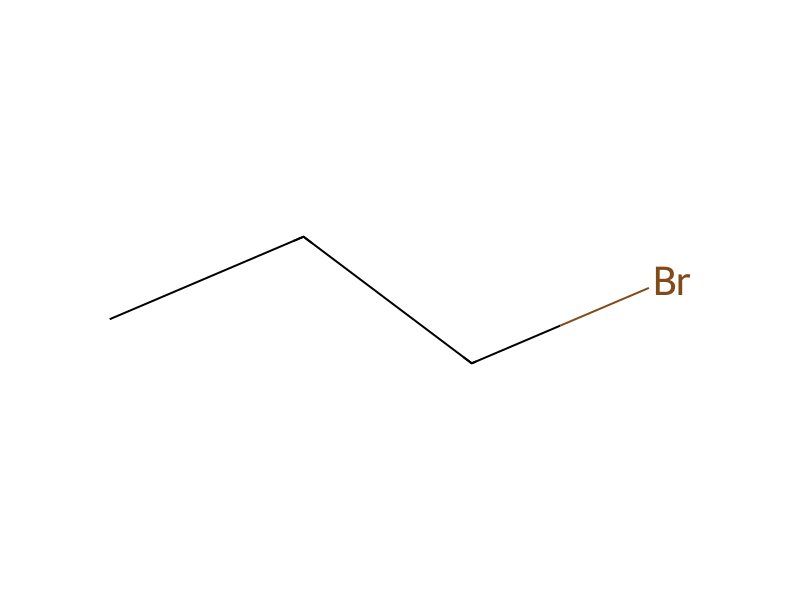




Procedure
Potassium carbonate (122 mg, 0.883 mmol) and then n-propyl bromide (40 μl, 0.440 mmol) were added to a solution of the N-(8-azabicyclo[3.2.1]oct-3-yl)-4-methyl-1H-indazol-5-amine (74 mg, 0.289 mmol) obtained in Example 501 in N,N-dimethylformamide (2 ml), and the resulting mixture was stirred at room temperature for 15 hours. After the solid was removed by filtration, the solvent was distilled off under reduced pressure as an azeotrope with toluene. The residue was purified by a silica gel column chromatography (chloroform/methanol/triethylamine=100/1/5) and then a preparative thin-layer chromatography (200×200×0.5 mm, 2 plates, eluent: chloroform/methanol/triethylamine=100/5/5) to obtain N-(8-propyl-8-azabicyclo[3.2.1]oct-3-yl)-4-methyl-1H-indazol-5-amine (36 mg, 42%).
Workup
- customAfter the solid was removed by filtration
- distillationthe solvent was distilled off under reduced pressure as an azeotrope with toluene
- customThe residue was purified by a silica gel column chromatography (chloroform/methanol/triethylamine=100/1/5)
Sources & evidence
- ORD record
- ord-72a699e993934173912506aad9c70152
- Source dataset
- uspto-grants-2007_04
- Patent number
- US07199147B2
Reaction notes
Loading…