Potassium Carbonate → HCID 15603002, compound
Reaction equation

[C:1]1(/[C:7](/[CH3:13])=[CH:8]/[S:9]([NH2:12])(=[O:11])=[O:10])[CH:6]=[CH:5][CH:4]=[CH:3][CH:2]=1.C(=O)([O-])[O-].[K+].[K+].[Cl:20][C:21]1[CH:29]=[C:28]([Cl:30])[CH:27]=[CH:26][C:22]=1[C:23](Cl)=[O:24]>O1CCOCC1>[Cl:20][C:21]1[CH:29]=[C:28]([Cl:30])[CH:27]=[CH:26][C:22]=1[C:23]([NH:12][S:9](/[CH:8]=[C:7](/[C:1]1[CH:2]=[CH:3][CH:4]=[CH:5][CH:6]=1)\[CH3:13])(=[O:10])=[O:11])=[O:24]Participants
5
Reactant 3

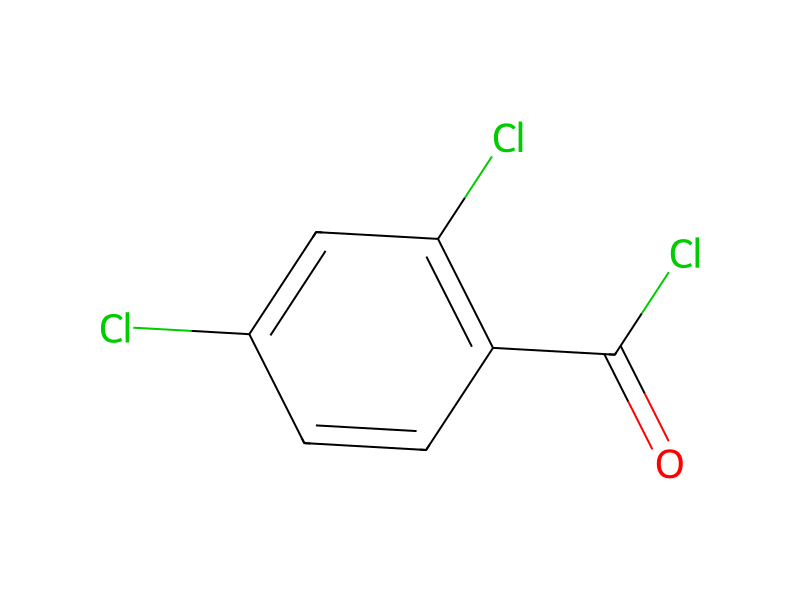

Product 1

Reagents, catalysts & solvents 1

Conditions
- Temperature
- 100 °C
Procedure
(E)-2-Phenyl-propene-1-sulfonic acid amide is dissolved in dioxane followed by the addition of potassium carbonate and 2,4-dichlorobenzoyl chloride. The resulting solution is stirred in a sealed tube at 100° C. for 18.5 h, cooled to room temperature (RT) and partitioned between 1M HCl and ethyl acetate. The aqueous phase is separated and extracted with further portions of ethyl acetate. The organic fractions are combined, washed with brine, dried over MgSO4 and concentrated in vacuo. After flash column chromatography (dichloromethane) (E)-2-phenyl-propene-1-sulfonic acid 2,4-dichlorobenzoylamide can be isolated as a colourless oil. Yield 90 mg (80%).
Workup
- temperaturecooled to room temperature (RT)
- custompartitioned between 1M HCl and ethyl acetate
- customThe aqueous phase is separated
- extractionextracted with further portions of ethyl acetate
- washwashed with brine
- dry with materialdried over MgSO4
- concentrationconcentrated in vacuo
Sources & evidence
- ORD record
- ord-ded41b0c791d495ab0a0193541fb74bd
- Source dataset
- uspto-grants-2007_04
- Patent number
- US07208526B2
Reaction notes
Loading…