1-Octanol → Octanal
Reaction equation

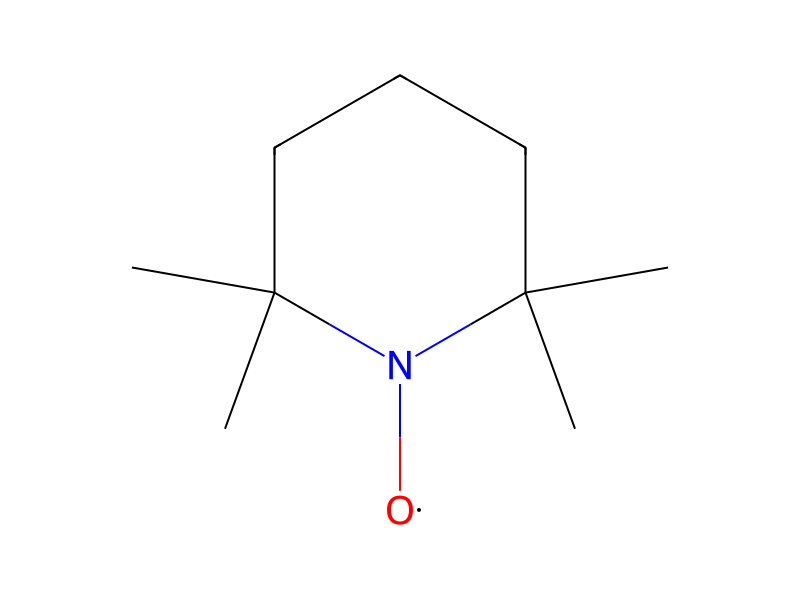
[CH2:1]([OH:9])[CH2:2][CH2:3][CH2:4][CH2:5][CH2:6][CH2:7][CH3:8].C(=O)([O-])O.[Na+].C1C(=O)N(Br)C(=O)C1>CC1(C)N([O])C(C)(C)CCC1.ClCCl>[CH:1](=[O:9])[CH2:2][CH2:3][CH2:4][CH2:5][CH2:6][CH2:7][CH3:8]Participants
6
Reactant 3



Product 1

Reagents, catalysts & solvents 2

Procedure
1-Octanol (2.0 g, 15.4 mmol), sodium hydrogencarbonate (1.6 g, 18.5 mmol), TEMPO (24 mg, 0.15 mmol) and dichloromethane (15 ml) were put in a 50-ml egg plant type flask. The suspension was cooled to less than 10° C. in an ice bath, and thereto was added NBS (3.0 g, 16.9 mmol) divided in three portions. The insoluble materials were filtered off and the filtrate was washed with 5% aqueous sodium bicarbonate solution. The crude product was purified by distillation to give 1-octanal (1.74 g, yield 88%).
Workup
- temperatureThe suspension was cooled to less than 10° C. in an ice bath
- filtrationThe insoluble materials were filtered off
- washthe filtrate was washed with 5% aqueous sodium bicarbonate solution
- distillationThe crude product was purified by distillation
Sources & evidence
- ORD record
- ord-b347d2de89ca46ae85dc52eda56511c1
- Source dataset
- uspto-grants-2007_04
- Patent number
- US07208634B2
Reaction notes
Loading…