3-Phenoxybenzaldehyde → Sodium
Reaction equation

[O:1](C1C=C(C=CC=1)C=O)C1C=CC=CC=1.[Na:16].[CH3:17][C:18]1([CH3:30])[C@@H:20]([CH:21]([Br:26])[C:22]([Br:25])([Cl:24])[Cl:23])[C@@H:19]1[C:27](Cl)=[O:28]>[Cl-].[Zn+2].[Cl-]>[Na:16].[CH3:17][C:18]1([CH3:30])[C@@H:20]([CH:21]([Br:26])[C:22]([Br:25])([Cl:24])[Cl:23])[C@@H:19]1[C:27]([O-:1])=[O:28]Participants
6
Reactant 3
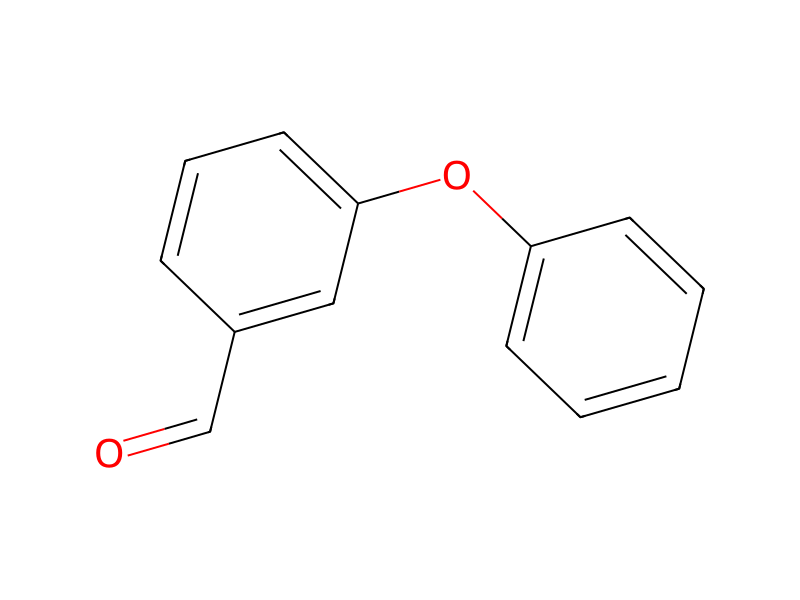


Product 2

Reagents, catalysts & solvents 1

Conditions
- Temperature
- 20 °C
Procedure
A mixture of 8 g of 3-phenoxy-benzaldehyde and 15.5 g of 1R, trans 2,2-dimethyl-3-(1',2'-dibromo-2',2'-dichloroethyl)-cyclopropane-1-carboxylic acid chloride was warmed to obtain a homogeneous liquid and the mixture was cooled to 20° C. 0.150 g of anhydrous zinc chloride were added thereto and the mixture was stirred at 20° C. for 17 hours to obtain raw RS α-chloro-3-phenoxy-benzyl 1R, trans 2,2-dimethyl-3-(1',2'-dibromo-2',2'-dichloroethyl)-cyclopropane-1-carboxylate whose IR spectrum showed an absorption at 1750 cm-1 (carbonyl) andwhose RMN Spectrum showed the absence of an aldehydic proton.
Workup
- temperaturewas warmed
- customto obtain a homogeneous liquid
Sources & evidence
- ORD record
- ord-e709cd144fa142a783461d423f6e1dd1
- Source dataset
- uspto-grants-1981_07
- Patent number
- US04277617
Reaction notes
Loading…