Methanol → tert-Butyl mercaptan
Reaction equation

[OH-].[Na+].CO.[CH3:5][C:6]([SH:9])([CH3:8])[CH3:7].O=[Si]=O>[O-][Mo]([O-])(=O)=O.[Co+2].O>[CH3:5][C:6]([SH:9])([CH3:8])[CH3:7].[C:6]([S:9][S:9][C:6]([CH3:8])([CH3:7])[CH3:5])([CH3:8])([CH3:7])[CH3:5]Participants
Reactant 4



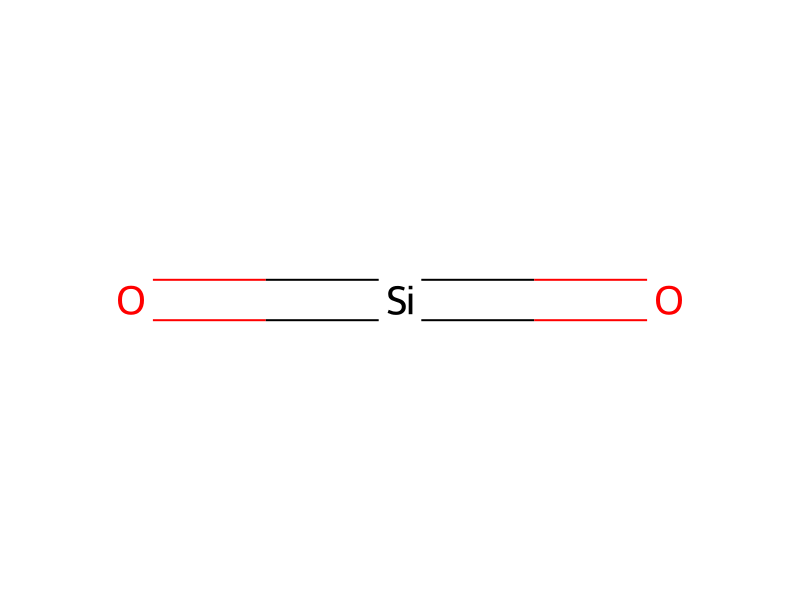
Product 2

Reagents, catalysts & solvents 2


Conditions
- Temperature
- 25 °C
Procedure
This is an inventive run illustrating the current invention. To a 1 gallon 316 stainless steel autoclave equipped with a stirrer, internal cooling coils, overhead condenser, back pressure regulator and air addition tube was charged 2 grams of cobalt molybdate on alumina catalyst (HDS-2), 10 grams solid sodium hydroxide pellets, 250 milliliters (198 grams) methyl alcohol, and 500 milliliters (403 grams, 4.97 moles) of 2-methyl-2-propanethiol (tertiary-butyl mercaptan). After closing the reactor, the agitator was started and the system pressured to 300 psig (2.068 MPa) with air at about 25° C. (77° F.). An air flow was then started through the reaction mixture (e.g. below the liquid surface) at such a rate that a minimum amount of alcohol and mercaptan were carried overhead through the condensor (2.5 cubic feet/hr.). The reactor temperature was allowed to rise to about 54°-60° C. (130°-140° F.) due to the heat generated by the reaction. This temperature was then maintained by the addition of cooling water through the coils. After 4 hrs., the reaction mixture was cooled to about 25° C. vented and transferred to a separatory funnel. Two liquid phases formed. Each of these phases was analyzed by GLC using a 12 ft. column packed with 10% SE 30 silicon rubber on 60-80 mesh Chromosorb P that had been previously mineral acid washed and dried. The top phase (212grams) contained 94.3 wt. % methyl alcohol, 0.2 wt. % 2-methyl-2-propanethiol, 5.0 wt. % di-tert-butyl disulfide, and 0.5 wt. % heavies. The bottom phase (395 grams) contained 9.3 wt. % methyl alcohol, a trace of 2-methyl-2-propanethiol, 90.6 wt. % di-tert-butyl disulfide and1.1 wt. % heavies. Based on these analyses there was obtained a 99 wt. % conversion of 2-methyl-2-propanethiol with an 85 wt. % selectivity of di-tert-butyl disulfide. The top phase was stripped at atmospheric pressure to 81° C. (187° F.) head temperature, 115° C. (239° F.) kettle temperature to remove the alcohol and the kettle product combined with the bottom phase and fractionated at 100 mm vacuum. An 84 wt. % distilled yield of di-tert-butyl disulfide was obtained distilling mostly at 125° C. (257° F.)/100 mm.
Workup
- temperatureinternal cooling
- additioncoils, overhead condenser, back pressure regulator and air addition tube
- custompressured to 300 psig (2.068 MPa) with air at about 25° C.
- custom(77° F.)
- customto rise to about 54°-60° C.
- custom(130°-140° F.)
- customgenerated by the reaction
- customtransferred to a separatory funnel
- customTwo liquid phases formed
- washwashed
- customdried
Sources & evidence
- ORD record
- ord-5e56dbb8a5f047cd82715c6be6c3335c
- Source dataset
- uspto-grants-1981_07
- Patent number
- US04277623
Reaction notes
Loading…