Water → HCID 23452508, compound
Reaction equation

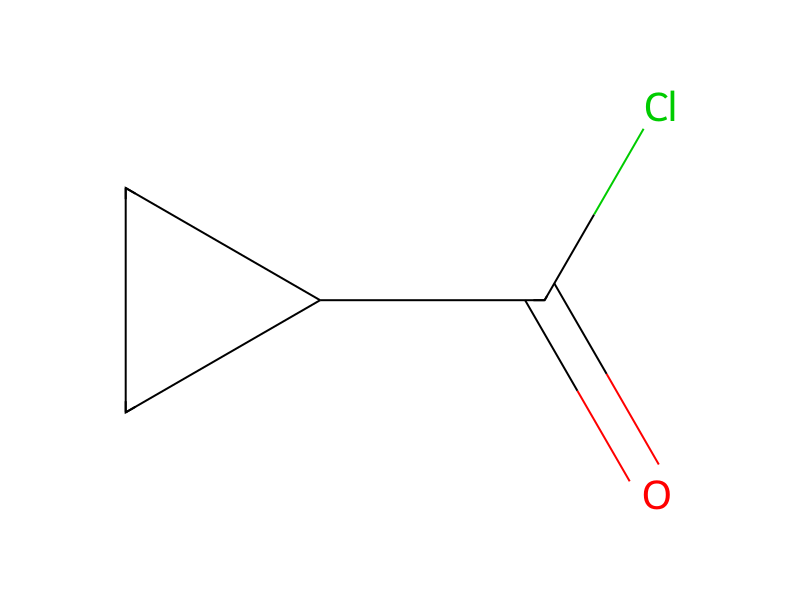
[CH:1]1([C:4](Cl)=[O:5])[CH2:3][CH2:2]1.[Cl:7][C:8]1[CH:19]=[CH:18][C:11]([CH2:12][CH:13]2[CH2:17][CH2:16][CH2:15][NH:14]2)=[CH:10][CH:9]=1.C(N(CC)CC)C.O>ClCCl>[Cl:7][C:8]1[CH:19]=[CH:18][C:11]([CH2:12][CH:13]2[CH2:17][CH2:16][CH2:15][N:14]2[C:4]([CH:1]2[CH2:3][CH2:2]2)=[O:5])=[CH:10][CH:9]=1Participants
6
Reactant 4



Product 1

Reagents, catalysts & solvents 1

Procedure
Add (dropwise, at 0° to 8°) 5.2 g of cyclopropanecarboxylic acid chloride in 10 ml of dichloromethane to 10 g of 2-(4-chlorobenzyl)pyrrolidine and 6.2 g of triethylamine. Stir the thus-prepared reaction mixture for a further 2 hours at 0°. Add water thereto. Separate off the organic phase and extract it with dichloromethane. Combine the organic phases and wash them with dilute hydrochloric acid and sodium carbonate solution. Dry the washed material over sodium sulfate. Evaporate off the solvent from the dried material, and then distil the oily residue to obtain the title compound (8.85 g) in the form of oil (b.p. 135° to 137° at 0.005 mm Hg), which solidifies to a crystalline mass of m.p. 62° to 64°.
Workup
- customthe thus-prepared reaction mixture for a further 2 hours at 0°
- customSeparate off the organic phase
- extractionextract it with dichloromethane
- washwash them with dilute hydrochloric acid and sodium carbonate solution
- dry with materialDry the washed material over sodium sulfate
- customEvaporate off the solvent from the dried material
- customdistil the oily residue
Sources & evidence
- ORD record
- ord-b950cad31ef1457782a47f82f19145bf
- Source dataset
- uspto-grants-1981_07
- Patent number
- US04279918
Reaction notes
Loading…