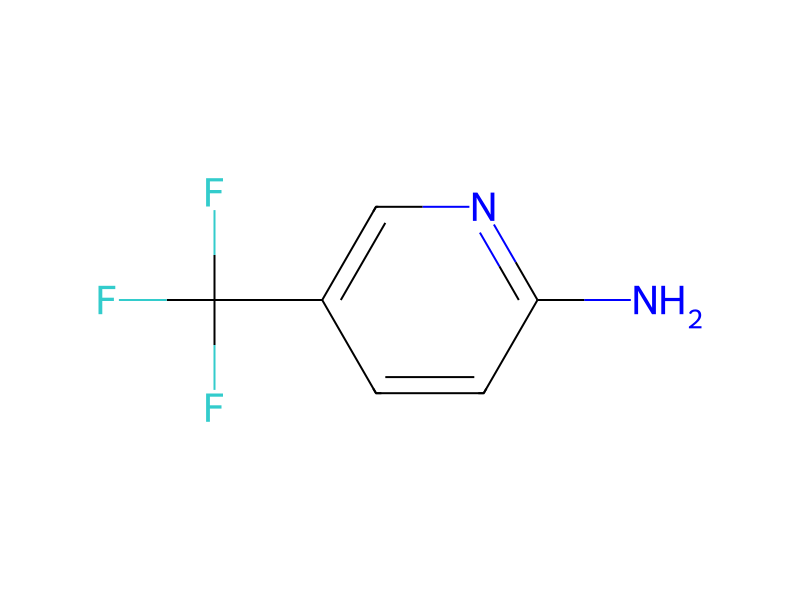
2-Amino-5-(trifluoromethyl)pyridine → 1-(2-Chloro-6-fluorobenzoyl)-3-(5-trifluoromethyl-2-pyridinyl)urea
Reaction equation

[F:1][C:2]([F:11])([F:10])[C:3]1[CH:4]=[CH:5][C:6]([NH2:9])=[N:7][CH:8]=1.[Cl:12][C:13]1[CH:23]=[CH:22][CH:21]=[C:20]([F:24])[C:14]=1[C:15]([N:17]=[C:18]=[O:19])=[O:16]>>[Cl:12][C:13]1[CH:23]=[CH:22][CH:21]=[C:20]([F:24])[C:14]=1[C:15]([NH:17][C:18]([NH:9][C:6]1[CH:5]=[CH:4][C:3]([C:2]([F:1])([F:10])[F:11])=[CH:8][N:7]=1)=[O:19])=[O:16]Participants
3


Procedure
A portion of 5-trifluoromethyl-2-aminopyridine is reacted with 2-chloro-6-fluorobenzoyl isocyanate as described in Example 1. The reaction mixture is evaporated under vacuum and the product is recrystallized to obtain the product named above.
Workup
- customThe reaction mixture is evaporated under vacuum
- customthe product is recrystallized
- customto obtain the product
Sources & evidence
- ORD record
- ord-e5930e012c074200becefce690fb7738
- Source dataset
- uspto-grants-1981_07
- Patent number
- US04281003
Reaction notes
Loading…