Benzyl Bromide → HCID 11108273, compound
Reaction equation

[O:1]=[C:2]1[O:8][C@H:7]([C@H:9]([CH2:11][OH:12])[OH:10])[C:5]([OH:6])=[C:3]1[OH:4].C(=O)([O-])[O-].[Cs+].[Cs+].[CH2:19](Br)[C:20]1[CH:25]=[CH:24][CH:23]=[CH:22][CH:21]=1>CS(C)=O.ClCCl>[CH2:19]([O:6][C:5]1[C@@H:7]([C@H:9]([CH2:11][OH:12])[OH:10])[O:8][C:2](=[O:1])[C:3]=1[OH:4])[C:20]1[CH:25]=[CH:24][CH:23]=[CH:22][CH:21]=1Participants
6
Reactant 3


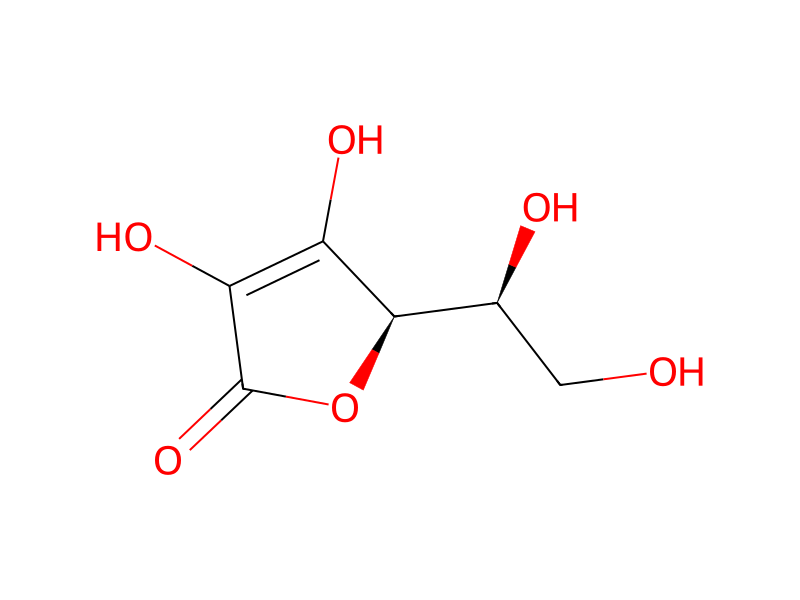
Product 1

Reagents, catalysts & solvents 2


Conditions
- Temperature
- 50 °C
Procedure
Ascorbic acid (10 g, 56.8 mmol) was dissolved in 60 ml of dimethylsulfoxide, followed by addition of cesium carbonate (9.25 g, 28.4 mmol). After 20 minutes, benzyl bromide (6.75 ml, 56.8 mmol) was added to the reaction mixture and heated to 50° C. for 18 hours. The reaction mixture was cooled down to the room temperature and diluted with 150 ml of dichloromethane to produce a solid. After filtration, the filtrate was concentrated under reduced pressure and purified by column chromatography on silica gel to give 7.2 g of the 3-O-benzyl ascorbic acid (yield 48%).
Workup
- temperatureThe reaction mixture was cooled down to the room temperature
- customto produce a solid
- filtrationAfter filtration
- concentrationthe filtrate was concentrated under reduced pressure
- custompurified by column chromatography on silica gel
Sources & evidence
- ORD record
- ord-86563f1273724ae28f3453b117a169f3
- Source dataset
- uspto-grants-2002_09
- Patent number
- US06444144B1
Reaction notes
Loading…