Diphosgene → HCID 13711524, compound
Reaction equation

[F:1][C:2]1[CH:8]=[C:7]([Cl:9])[C:6]([C:10]([O:12][CH3:13])=[O:11])=[CH:5][C:3]=1[NH2:4].[O:14]=[C:15](Cl)OC(Cl)(Cl)Cl>C1COCC1.C1(C)C=CC=CC=1>[F:1][C:2]1[CH:8]=[C:7]([Cl:9])[C:6]([C:10]([O:12][CH3:13])=[O:11])=[CH:5][C:3]=1[N:4]=[C:15]=[O:14]Participants
5
Reactant 2
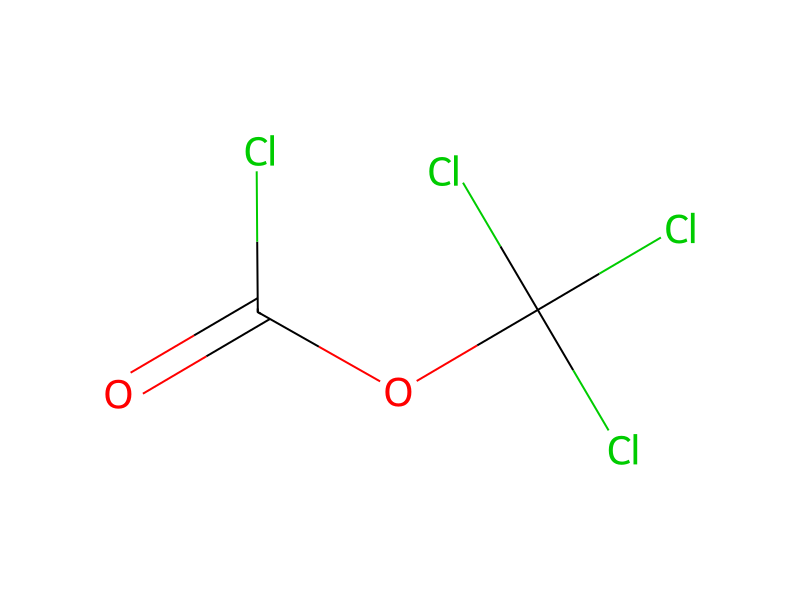

Product 1

Reagents, catalysts & solvents 2


Procedure
A solution of 2-fluoro-4-chloro-5-methoxycarbonylaniline (1.0 g, 5 mmol) in THF (10 mL) was added dropwist to a solution of diphosgene (2.0 g, 10 mmol) in toluene (20 mL) with stirring at room temperature. The reaction mixture was stirred at room temperature for one hour and then heated to reflux for 4 hours. The mixture was then cooled to room temperature and the solvents were evaporated under reduced pressure to give 1.1 g of 2-fluoro-4-chloro-5-methoxycarbonylphenyl isocyanate as a solid. This was used for the next step without further purification.
Workup
- stirringThe reaction mixture was stirred at room temperature for one hour
- temperatureheated
- temperatureto reflux for 4 hours
- temperatureThe mixture was then cooled to room temperature
- customthe solvents were evaporated under reduced pressure
Sources & evidence
- ORD record
- ord-0fbb8ea3211e486a94fd03207182a651
- Source dataset
- uspto-grants-2002_09
- Patent number
- US06444615B1
Reaction notes
Loading…