Hydrochloric Acid → 6-Bromoisoquinoline N-oxide hydrochloride
Reaction equation

[Br:1][C:2]1[CH:3]=[C:4]2[C:9](=[CH:10][CH:11]=1)[CH:8]=[N:7][CH:6]=[CH:5]2.[Cl:12]C1C=CC=C(C(OO)=[O:20])C=1.Cl.C(OCC)C>ClCCl.CO>[ClH:12].[Br:1][C:2]1[CH:3]=[C:4]2[C:9](=[CH:10][CH:11]=1)[CH:8]=[N+:7]([O-:20])[CH:6]=[CH:5]2Participants
7






Procedure
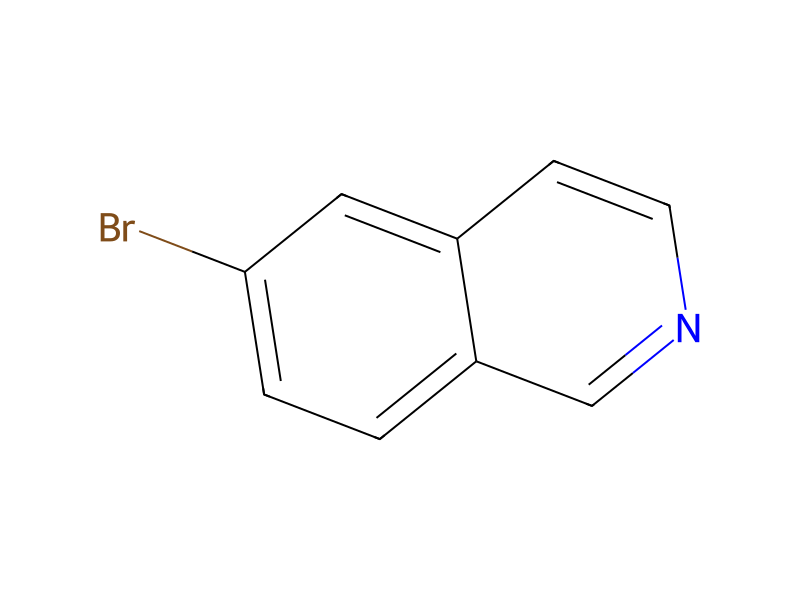
To a stirred solution of 13.2 g of 6-bromoisoquinoline (Tyson, F. L., J. Am. Chem. Soc. 61, 183 (1939)) in 250 mL of dichloromethane at room temperature was added in portions 16.2 g of m-chloroperbenzoic acid (purity 70%). After stirring the mixture for one hour 200 mL of methanol was added and the bulk was reduced to 150 mL. A hydrogen chloride solution in methanol (100 mL, 0.75 M) was added and after slightly heating a clear solution was obtained. Diethylether (250 mL) was added to this solution and cooled in an ice bath. The hydrochloride salt precipitated and was isolated by filtration to give 15 g of 1a. M.p. 194-196° C.
Workup
- additionwas added
- temperatureafter slightly heating a clear solution
- customwas obtained
- temperaturecooled in an ice bath
- customThe hydrochloride salt precipitated
- customwas isolated by filtration
Sources & evidence
- ORD record
- ord-f699a930481440a8843f9a65e923f189
- Source dataset
- uspto-grants-2002_09
- Patent number
- US06444672B1
Reaction notes
Loading…