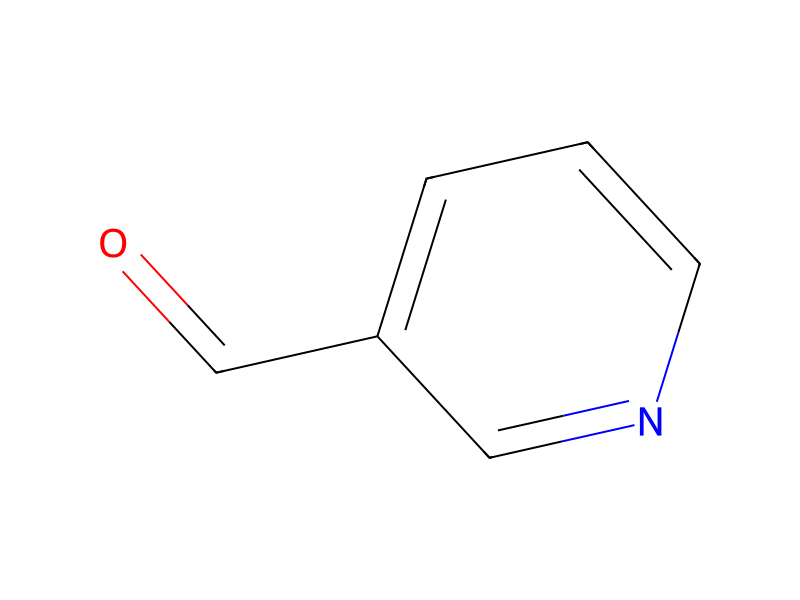
3-Pyridinecarboxaldehyde → HCID 53885487, compound
Reaction equation

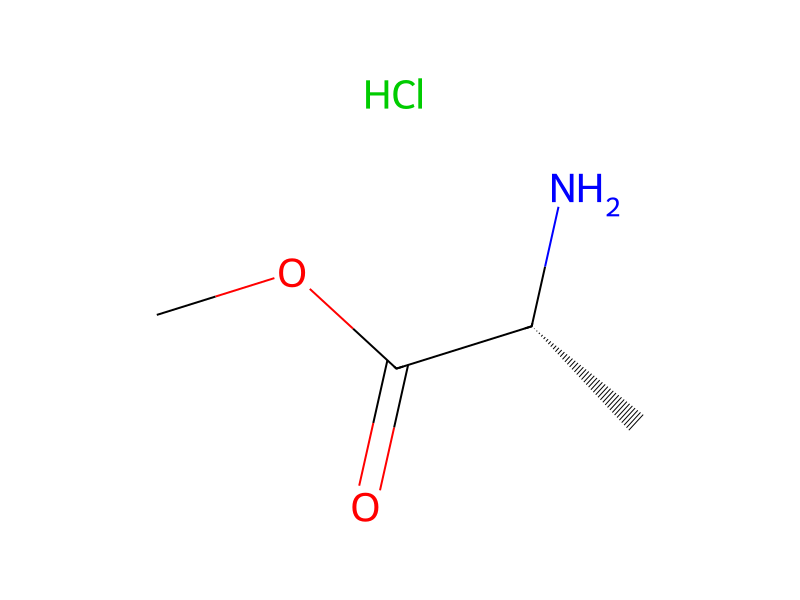
Cl.[CH3:2][O:3][C:4](=[O:8])[C@@H:5]([CH3:7])[NH2:6].[N:9]1[CH:14]=[CH:13][CH:12]=[C:11]([CH:15]=O)[CH:10]=1.C([BH3-])#N.[Na+]>CO>[CH3:2][O:3][C:4](=[O:8])[C@@H:5]([CH3:7])[NH:6][CH2:15][C:11]1[CH:10]=[N:9][CH:14]=[CH:13][CH:12]=1Participants
Reactant 3

Product 1

Reagents, catalysts & solvents 1

Procedure
Part A: To a solution of D-alanine methyl ester hydrochloride (6.0 grams) in methanol (25 mL) is added 1.1 equivalents of 3-Pyridinecarboxaldehyde. The solution is stirred at room temperature for several hours and then the solvent removed by rotary evaporation. The resulting imine is redissolved in acetic acid (10 mL) and methanol (2 mL), and sodium cyanoborohydride (1.5 equivalents) is added in several portions over 10 minutes. The mixture is then stirred for 16 hours and then concentrated by rotary evaporation. The resulting residue is partitioned between ethyl acetate and aqueous sodium carbonate (10%). The organic layer is dried over magnesium sulfate, filtered and concentrated to yield the desired N-3-picolyl-D-alanine methyl ester.
Workup
- customthe solvent removed by rotary evaporation
- dissolutionThe resulting imine is redissolved in acetic acid (10 mL)
- stirringThe mixture is then stirred for 16 hours
- concentrationconcentrated by rotary evaporation
- customThe resulting residue is partitioned between ethyl acetate and aqueous sodium carbonate (10%)
- dry with materialThe organic layer is dried over magnesium sulfate
- filtrationfiltered
- concentrationconcentrated
Sources & evidence
- ORD record
- ord-d47b28283cf84a518f5a7d5ac165bf12
- Source dataset
- uspto-grants-2002_09
- Patent number
- US06451791B1
Reaction notes
Loading…