Phosphorus oxychloride → methyl 3-formyl-1H-indole-4-carboxylate
Reaction equation

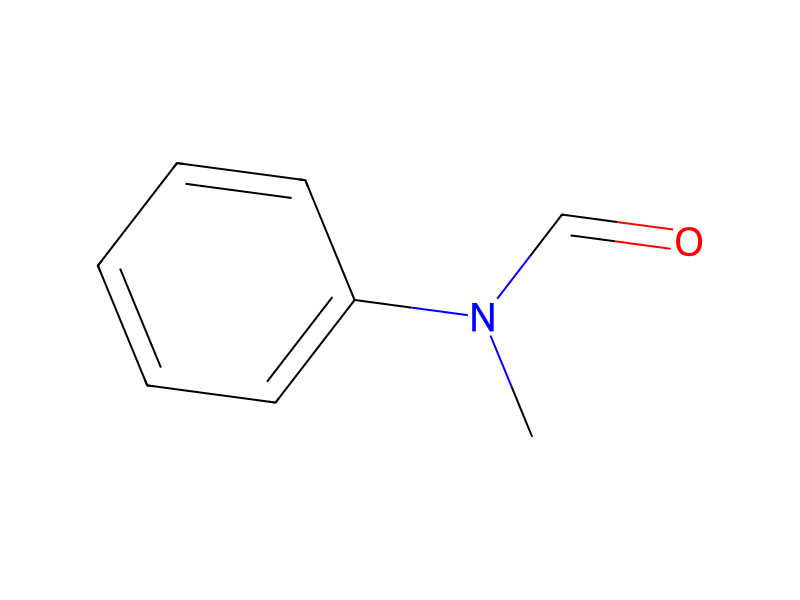
N1C2C3C(CN[C:6](=[O:13])C=3C=CC=2)=C1.C1NC=CC2C=1C1=CC=NC1=CC=2.[CH3:27][O:28][C:29]([C:31]1[C:32]2[CH:33]=[CH:34][NH:35][C:36]=2[CH:37]=[CH:38][CH:39]=1)=[O:30].CN(C=O)C1C=CC=CC=1.P(Cl)(Cl)(Cl)=O>>[CH3:27][O:28][C:29]([C:31]1[C:32]2[C:33]([CH:6]=[O:13])=[CH:34][NH:35][C:36]=2[CH:37]=[CH:38][CH:39]=1)=[O:30]Participants



Procedure
The starting material for the compounds of this invention is the amide, 3,4-dihydropyrrolo[4,3,2-de]isoquinolin5(lH)-one (2). The preparation of this starting material is described in detail in our copending patent application of Philipp et al., Ser. No. 413,417 now U.S. Pat. No. 3,950,343 and entitled "Pyrroloisoquinoline Derivatives". Briefly a preferred preparation of this starting material involves treating 4-indolecarboxylic acid methyl ester, F. C. Uhle, J. Amer. Chem. Soc., 71, 761 (1949), with N-methylformanilide in the presence of phosphorus oxychloride according to the conditions of the Vilsmeier reaction to obtain 3-formylindole-4-carboxylic acid methyl ester, converting the latter compound to its corresponding oxime, catalytically reducing the oxime in the presence of hydrochloric acid and palladium on charcoal to obtain 3-(aminomethyl)indole-4-carboxylic acid methyl ester hydrochloride and finally treating the latter compound with sodium methoxide to give the desired starting material of formula 2.
Workup
- customThe preparation of this starting material
- customBriefly a preferred preparation of this starting material
Sources & evidence
- ORD record
- ord-2a9590be8d3e43fab0403f1bfddbed21
- Source dataset
- uspto-grants-1976_08
- Patent number
- US03978066
Reaction notes
Loading…